
Welcome to the first trip report on BolehMiles! If you’re new here, I’m Peter, the Chief Travel Officer (CTO) of BolehMiles.
These days, you can easily scroll through YouTube, Facebook, or Instagram, and you’ll see tons of reviews with videos and photos of business and first-class flights. But did you realize most of these people are just… flexing?
I mean, they don’t tell you upfront what it actually costs. For an everyday Malaysian, someone who isn’t an influencer, doesn’t have a rich dad, or a famous uncle—how can you aspire to fly on business (or even first class)? What challenges might you encounter along the way?
That’s exactly the gap I’m trying to fill. These trip reports are here to show you what it really takes to make it happen and challenges you might face! From the number of miles needed to the taxes and fees involved, I break it down to help you decide if the miles game is worth it.
So without further ado, let’s jump into a recent trip I took!
Trip Overview
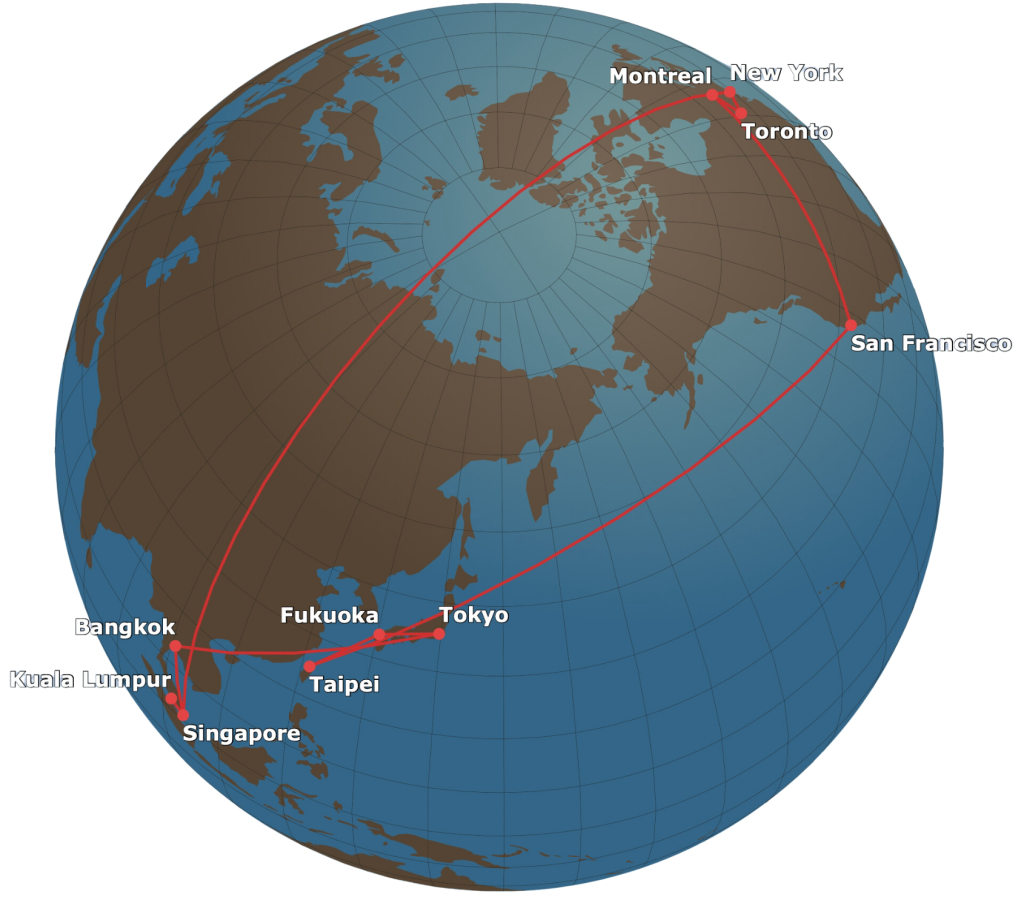
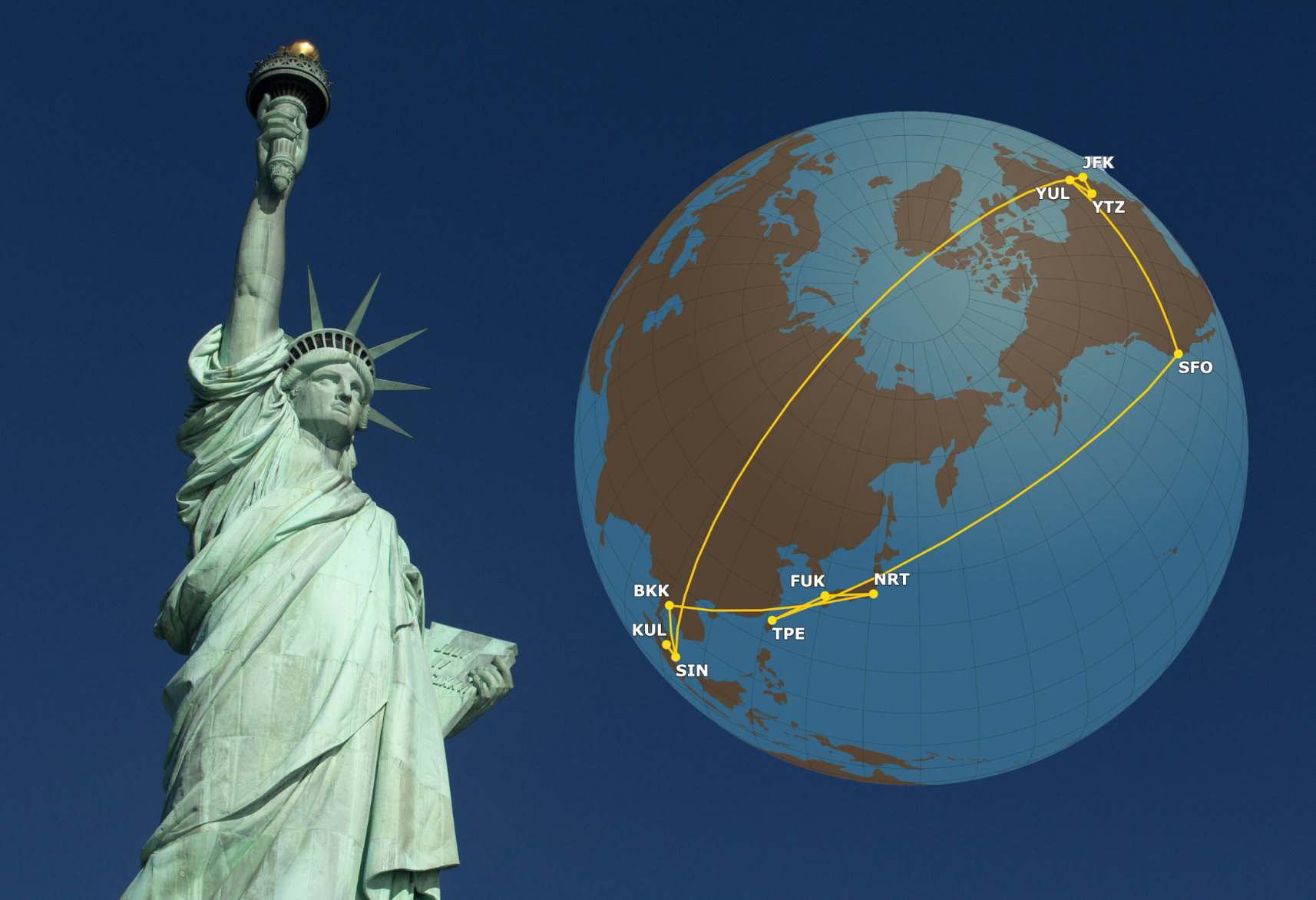
Route summary : Kuala Lumpur (KUL) – Singapore (SIN) – New York (JFK) – Toronto (YYZ) – Montreal (YUL) – San Francisco (SFO) – Taipei (TPE) – Fukuoka (FUK) – Tokyo (NRT) – Bangkok (BKK) – Singapore (SIN)
Duration: ~6 weeks
Miles Spent: 255,000 Miles
Cash Outlay (Air Ticket)*: RM3546
*This includes ticket cost, airport taxes and other fees.
| Seg. | Route | Carrier | Class | Miles | Cash Outlay |
|---|---|---|---|---|---|
| 1 | KUL – SIN – JFK | Singapore Airlines | Business | 111,500 KrisFlyer Miles | RM346 |
| 2 | EWR – YYZ | Porter Airlines | Economy | Revenue Ticket | RM870 |
| 3 | YUL – SFO | Air Canada | Business | 29,000 EvaAir Miles | RM440 |
| 4 | SFO – TPE – FUK | EvaAir | Business | 75,000 EvaAir Miles | RM940 |
| 5 | NRT – BKK – SIN | Thai Airways | Business | 40,000 EvaAir Miles | RM950 |
| 255,500 Miles | RM3,546 | ||||
Let’s put the overall cost into perspective. The normal tickets for the same trip would cost about ~RM45,000 after taxes and fees. That means the 255,500 miles here helped to absorb ~RM40,000, which can then be used on accommodation, food and other expenses.
Now, a typical influencer would put the headline as “Look How Far I’ve Flown on Business FOR FREE!“
But note that miles aren’t free. Accumulating miles often comes with costs, whether through cashback opportunity costs or the direct cost of acquiring miles.
This trip had many stops. I visited 7 cities (plus 2 layover cities) over 6 weeks. It’s definitely not a trip that most people would choose to do. But you can do a shorter one, like just visiting the USA. The purpose here is to showcase how I use my miles and maybe give you some inspiration.
Also, EVA Air miles (Seafood Miles) are hard to come by in Malaysia (available only through CIMB), but they’re not mandatory. You can use KrisFlyer or Asia Miles for a trip to the USA instead.
What’s excluded: Hotels, ground transportation, food, attraction tickets, and shopping.
A Trip to New York (Segment 1)
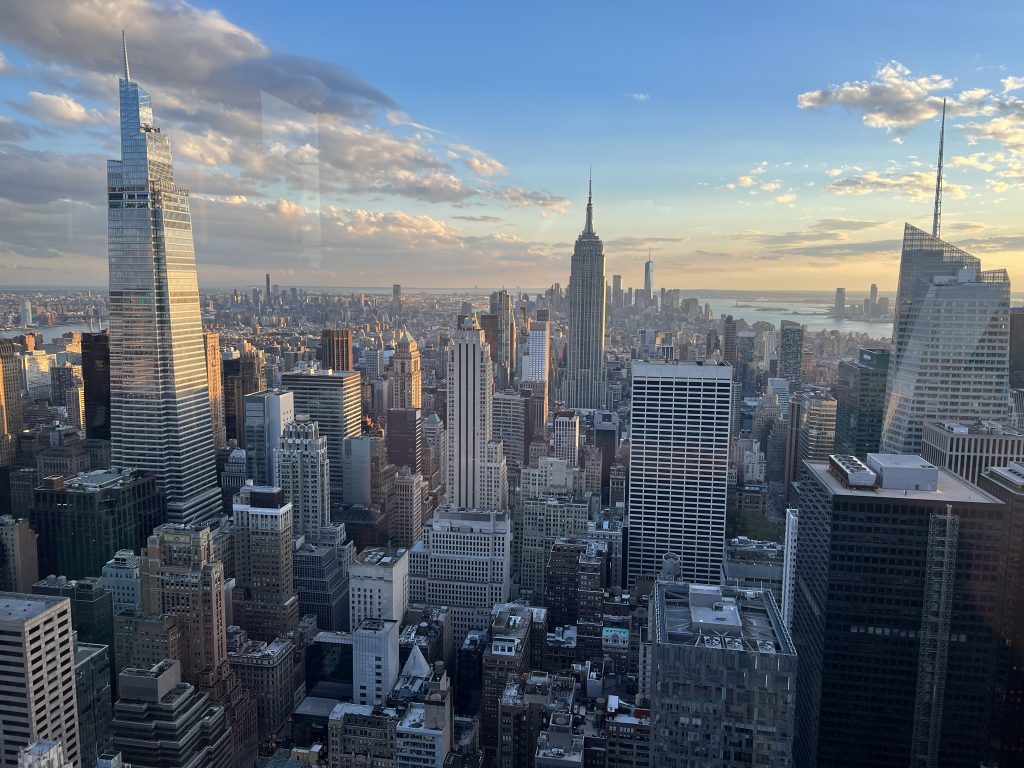
New York City. Growing up, I always wondered what it would be like to see NYC with my own eyes, just like in the Hollywood movies. Spiderman swinging through skyscrapers and Ironman soaring above the skyline! I dreamt of visiting the Empire State Building, the iconic backdrop of so many American music videos. The concrete jungle where dreams are made of, and the big lights inspiring you… Oh, New York.
At least, that’s what I told the officer during my interview at the US embassy when she asked why I was visiting America. I hoped my enthusiasm would win her over and get my tourist visa approved. This was years ago, during my first trip to the US.
What I didn’t tell her at the time was that I had already confirmed my Singapore Airlines Business Class (J) booking to New York after months on the waitlist—and I couldn’t change it. That’s the life of a typical miles chaser. Sometimes, you pick the destination first and figure out the reasons later.
“So… you’re going there for vacation?” she asked. I smiled and said yes.
For Malaysian passport holders, applying for a US tourist visa is a must, and the process can take up to 2 months to complete. So, keep this in mind if you’re planning your first trip to the US.
| The KUL-SIN-JFK route on Singapore Airlines is one of the best ways to get good value for your Krisflyer miles. Saver redemption category costs 115,000 miles on Business (J) per way. For comparison, the business revenue ticket was selling at ~RM18,000 per way for the same flight date. So even if we lowball and value this flight at RM10,000 per way on Business, it works out to be about 8 CPM value (higher if we don’t lowball), a very good use of this Meat Miles. Saver redemption slots are quite limited, and it’s best to redeem this flight 12 months ahead (T-355 days, to be exact). |
Kuala Lumpur – Singapore on Singapore Airlines Business
If you’ve followed this blog for a while, you’ll know we talk about KrisFlyer Miles (Meat Miles) a lot. When you make a redemption booking on Singapore Airlines—be it to Shanghai, Melbourne, London, or anywhere else—you’ll always fly through Singapore’s Changi Airport. This 1-hour connection from KUL-SIN is essentially ‘free’, in a sense that it costs the same amount of miles as flying directly from Singapore to your destination.
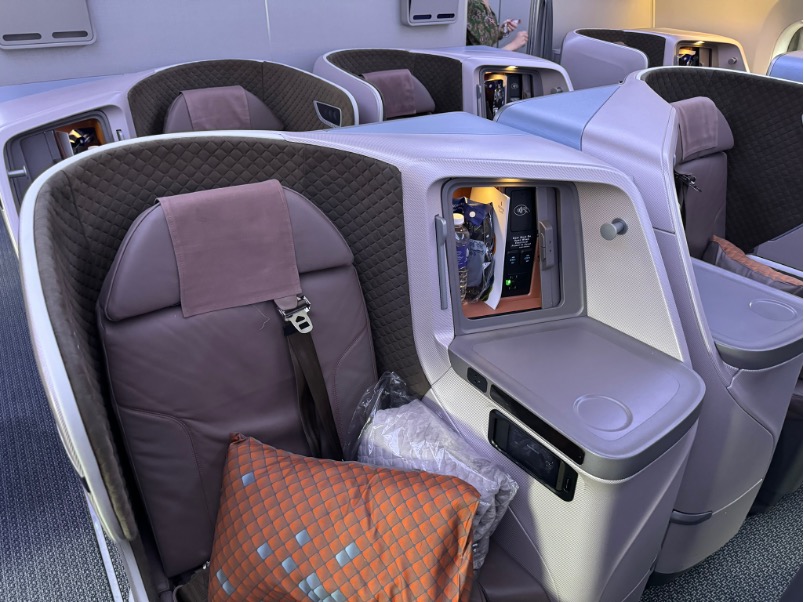
For the KUL-SIN leg, you’ll usually get Regional Business Class on Singapore Airlines. If you’re heading to JFK, it’s likely a Boeing 787-10 or Boeing 737-8 Max, especially on the earlier morning flights. I didn’t take photos on this exact flight, but here’s a photo of the SQ Regional Business Class seat (from my other flight) and a light meal you can expect.
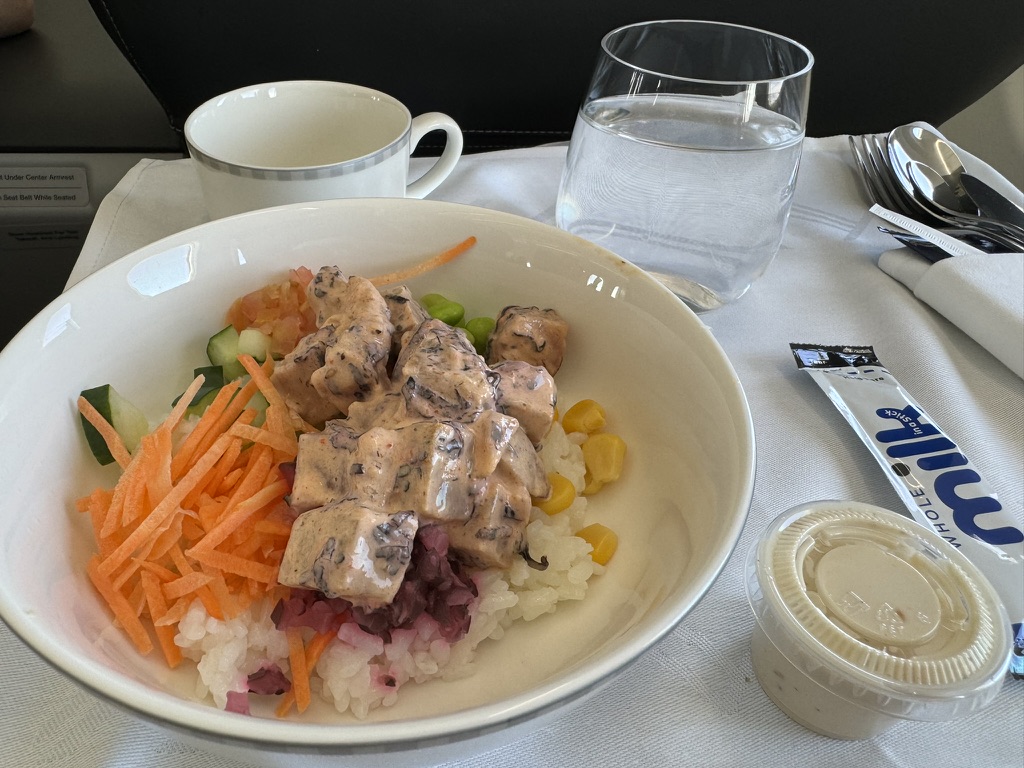
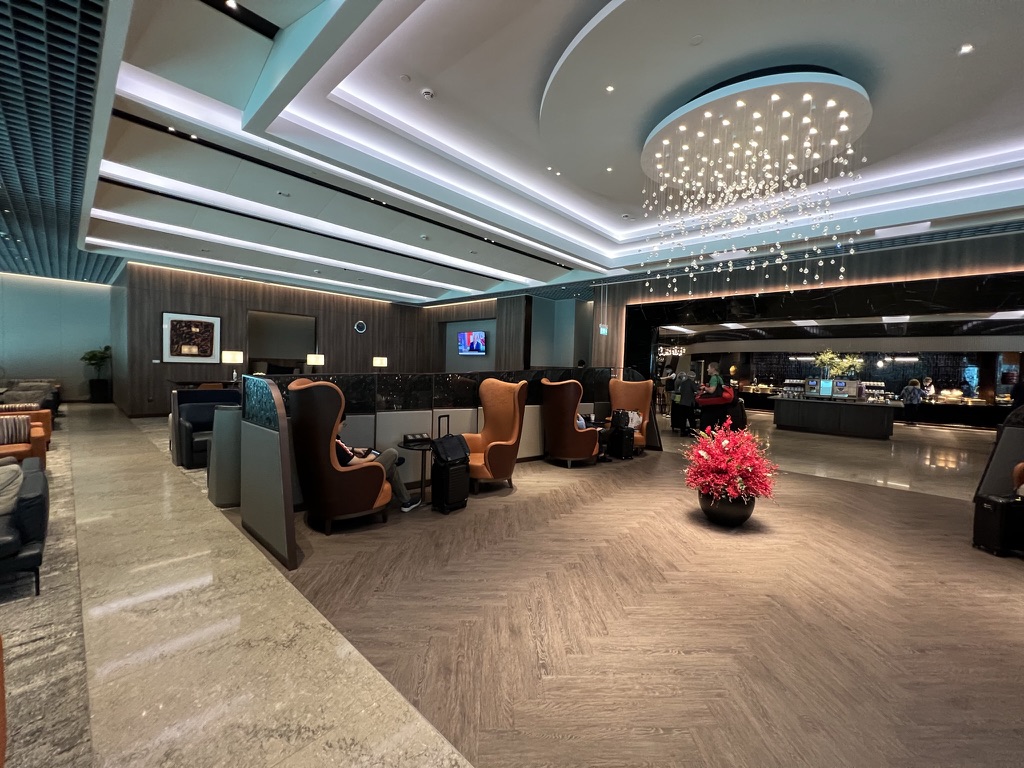
I do recommend allocating at least 2 hours buffer for your transits in Singapore, so that you have time to visit the Silver Kris Lounges to maximise the perk of a business class ticket.
Singapore to New York (The World’s Longest Flight – SQ24)
The SIN-JFK route is currently the World’s Longest Flight (~18 hours), and SQ started this route in Nov 2020, about 4 years now. The aircraft is usually a A350-900 (Ultra Long Range) with total of 67 Business Class seats and 94 Premium Economy Seats. There are no Suites, First and Economy seats on this flight. You can view the seat map here.
There are no Economy seats for good reasons, because for such a long ~18 hours direct flight, your back would hurt so much.
If you would like to try SQ’s famous Suites or First, you can so the another route, connecting through Frankfurt (SIN-FRA-JFK), which is also a good option.
Here’s how the SQ24 2013 J Business Class seats look like.
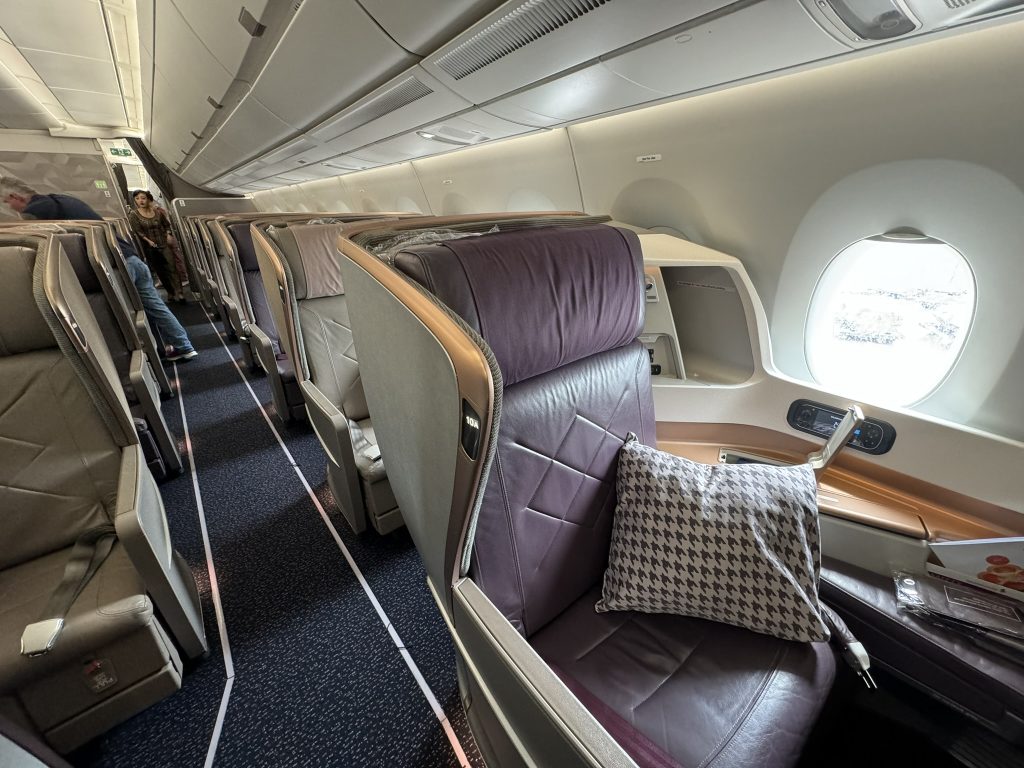
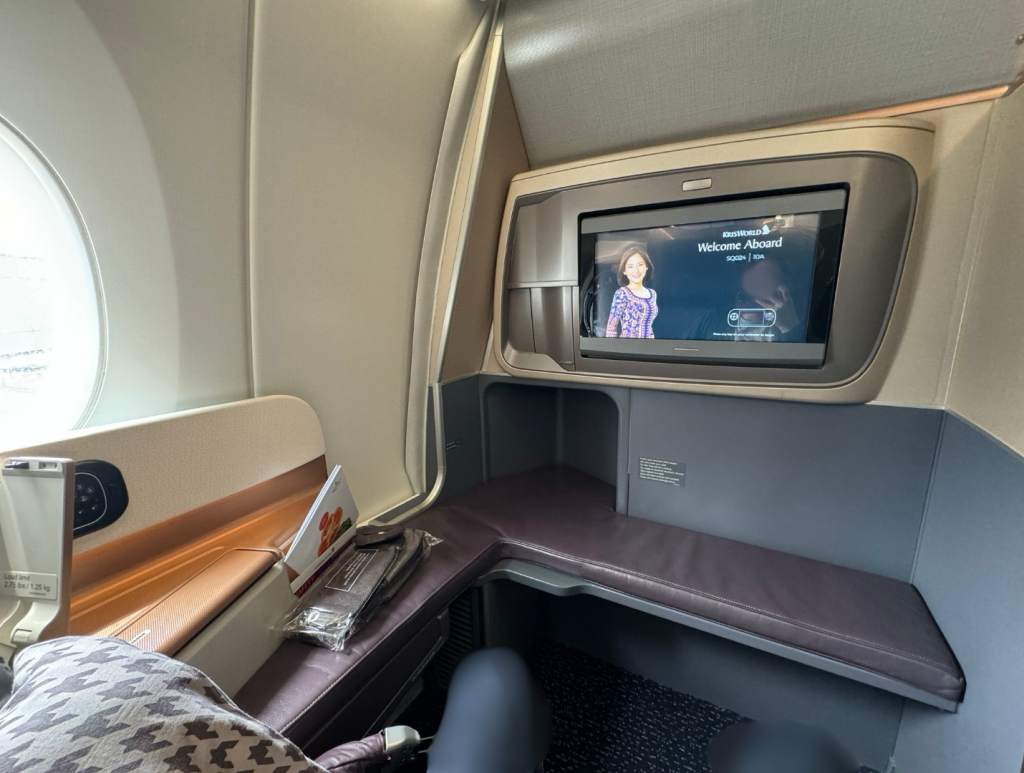
I was seated at seat 10A, the front-most seat. What’s good about the front-most seat is that get a little extra space for your legs compared to other seats. Now, many have pointed out that they hate the deep cubby hole that forces them to “sleep senget”. I never had problems sleeping with that, but this concern will be addressed in the upcoming SQ Business Class Seat Retrofit in 1 to 2 years time.
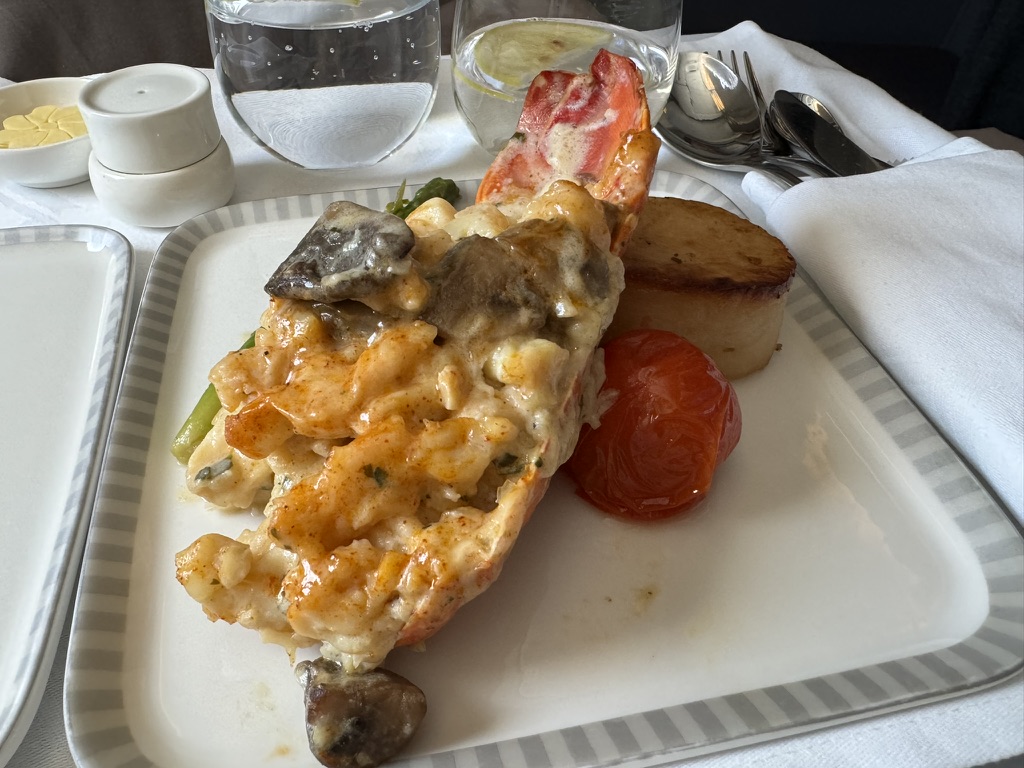
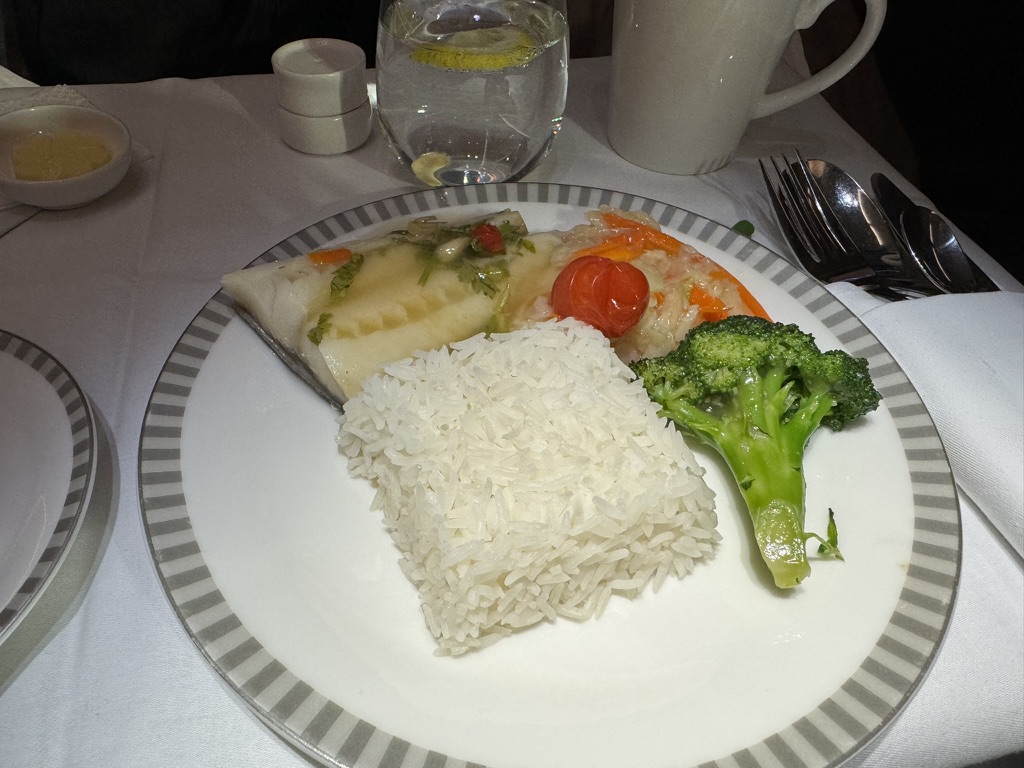
And here are the 2 main meals that I ordered through SQ’s Book the Cook(BTC) service before the flight. If this is the first time you’re booking through SQ’s BTC, I do recommend trying SQ’s signature Lobster Thermidor. I personally don’t fancy lobster, but I figured I should order it just for the pictures of this blog. I find it a little too creamy and buttery for my taste, but otherwise it was yummy.
Attention Deficit on the World’s Longest Flight
I don’t know if it’s just me having a childhood being neglected. Left in the dark. That’s literally how I felt onboard SQ24, with the cabin lights off for the majority of the flight.
This is my 5th time on this route, and every time, I can’t shake off the feeling that the service from the crew is… less attentive compared to other SQ flights. There are fewer prompts for food and drinks, less checking if you need help making the bed, and so on. Don’t get me wrong. When you press the service button, the crew is always kind and nice.
Curious, I had a casual chat with one of the SQ crew to figure out why. It all comes down to conserving energy and prioritising rest on such a long flight. For both the crew and passengers.
And on this ~18-hour journey, the main drawback for me is that there are only 2 main meal services. The first meal is served about an hour after takeoff, and the second meal comes “mid-flight.” I didn’t count the exact hours between meals for this flight, but I’d estimate it was 7–8 hours after the first meal.
For someone like me who’s always hungry, 7–8 hours between meals felt like an eternity. Yes, you can order refreshments in between the main meal services, but the options are mostly noodles which I don’t fancy.
For comparison, even on shorter flights (e.g., Singapore to London, 12 to 13 hours), you usually get 2 main meal services. I understand the capacity and operational constraints, so having 3 main meal services on a single flight might not be feasible. But maybe they could consider offering more refreshment options?
So to my readers. If you’re always hungry (like me), don’t hesitate to order refreshments. It’s better than waiting and regretting it later!
|
Travel Tip: Don’t be shy to press that Flight Attendant Call Button on this World’s Longest Flight! No need to tahan and hope they magically show up. Hungry? Thirsty (physical kind)? Need help with the bed? Just press the button. But be nice, and don’t spam the button. |
What I did in NYC
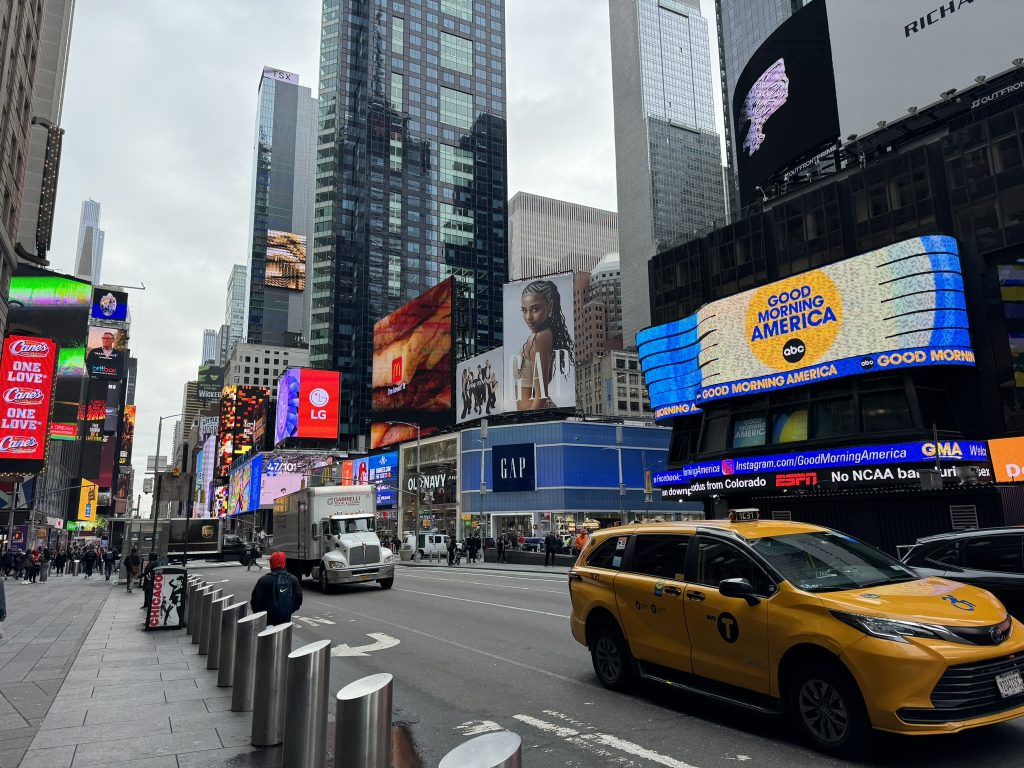
I spent 4 nights in New York City on this trip, staying near Times Square. This being my third visit, I skipped most of the usual tourist spots and focused on revisiting The Metropolitan Museum of Art (The Met), watching a Broadway show, visiting Top of the Rock, and testing Tesla’s Full Self-Driving (FSD).
If it’s your first time in NYC, I highly recommend visiting the Empire State Building, Statue of Liberty, The Edge, The Met, and MoMA for an unforgettable introduction to the city.
A trip to Canada (Segment 2)
No offense to our brothers and sisters in North America, but in my opinion, the service quality of North American airlines is starkly different from what we’re used to here in Asia. Perhaps it’s a difference in culture, but they don’t seem to place as much emphasis on hospitality and respect.
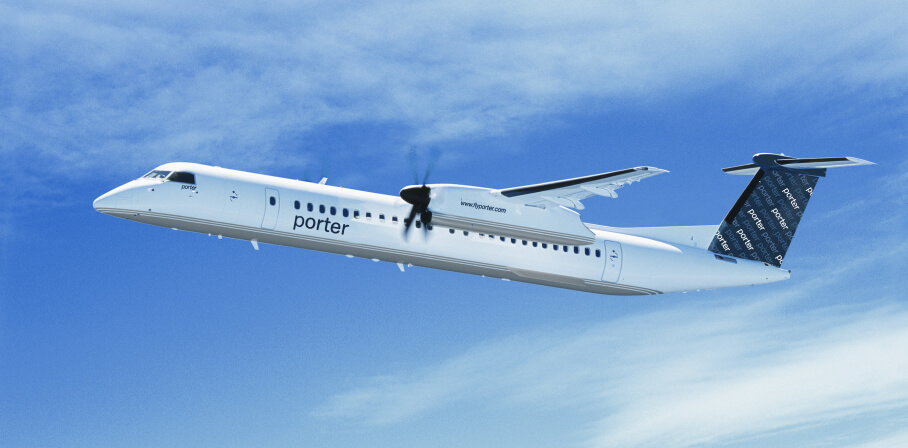
My flight from New York to Toronto was on Porter Airlines Economy. I’ve flown Air Canada and United before, so I thought I had seen the worst of North American Airlines. But what happened on this leg took things to a whole new level.
At the Porter Airlines check-in counter at Newark Airport, I handed over my passport to the ground staff. Here’s how the conversation unfolded:
Ground Staff: Where are you going? (with a long face)
Me: Good morning. I’m heading to Toronto.
Ground Staff: You…? A Malaysian..? Going to Toronto? What do you have?
Me: What do you mean, what do I have? I have a Y ticket today.
Ground Staff: You have a visa or something?
Me: Yes, I have a visitor visa. Here it is.
Ground Staff: How did you get a visa like this!? Why are you going to Toronto.. here to take our jobs?
At this point, I realized the conversation had turned hostile.
Me: For leisure. I’m not interested in your job. Are you going to give me my boarding pass or not?
After a heated exchange of unpleasant words (with international language), I finally got my boarding pass. But that wasn’t the end of it. When it was time to board, the same ground staff came to confront me again as I joined the queue at the end of the line.
Ground Staff: You need to queue. You Asians know what queuing is, right?
Me: What do you think I’m doing now?
Long story short, I managed to board the plane. But to avoid any further trouble, I didn’t take any pictures of the cabin, fearing photos might be prohibited for privacy reasons.
Here’s a marketing image of the cabin. It looks decent from the picture. In real life, it looks starkly different. It is much smaller and cramped than I thought it was. It felt more like Firefly that we have in Malaysia, but less spacious.
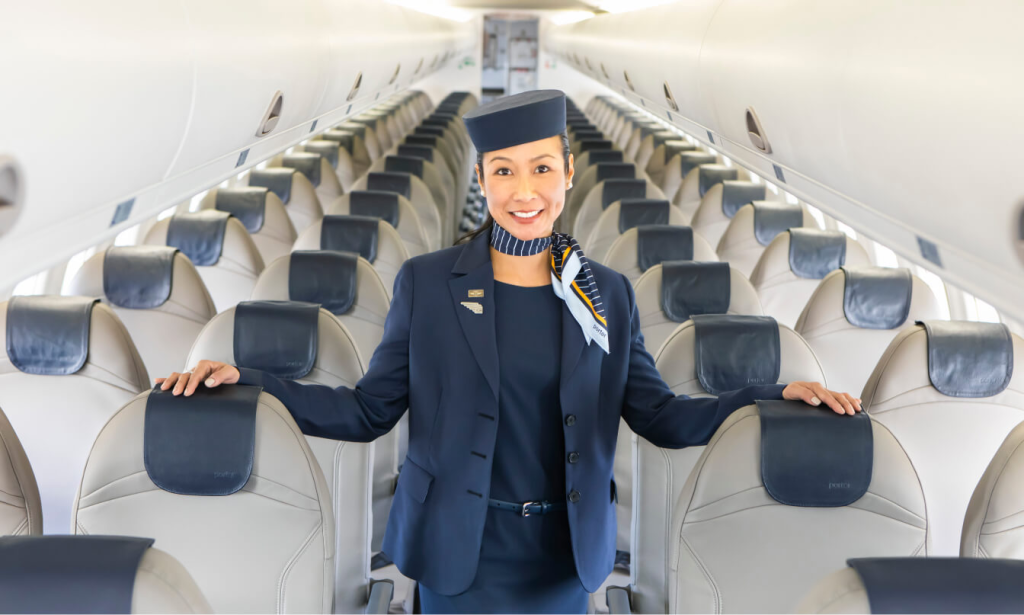
On top of that, I wasn’t aware that their standard carry-on luggage size is smaller than what we’re used to. My standard carry-on baggage (55cm x 40cm x 23cm) couldn’t fit into Porter’s smaller Turboprop overhead compartment (53cm x 34cm x 22cm). I had to check in my carry-on baggage instead. This narrower size is something travelers should keep in mind when flying Porter or other airlines using Turboprops or smaller aircrafts.
|
Travel Tip: 1. You will miss Asian hospitality when flying in America. It’s a fact of life. 2. Always check the size of your hand-carry baggage when flying on smaller aircrafts. |
What I did in Canada
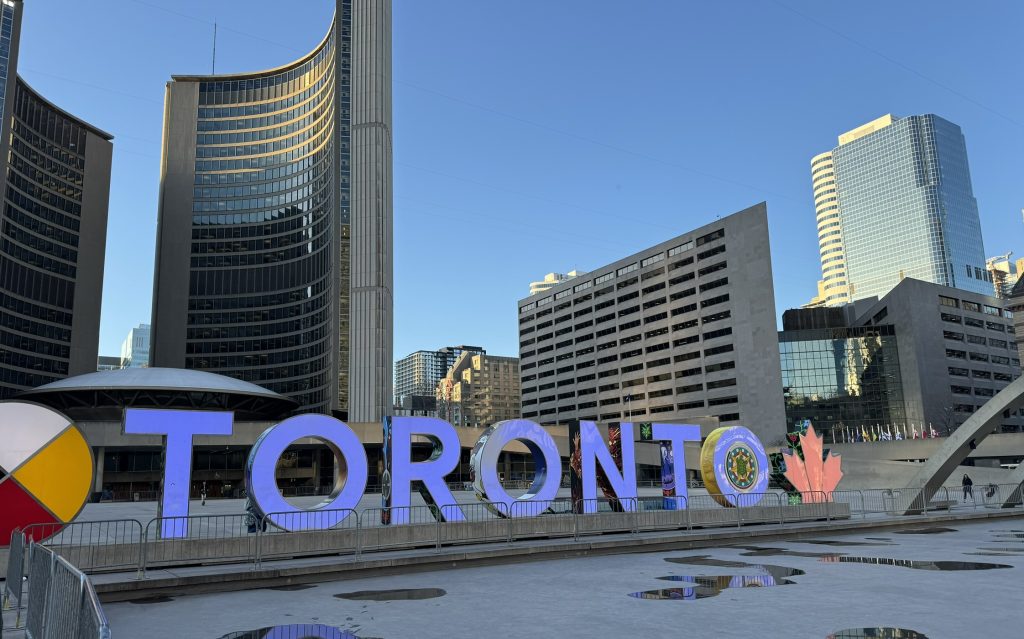
Toronto is a vibrant city with unforgettable highlights: breathtaking CN Tower views, the enchanting Casa Loma, nice exhibits at the Royal Ontario Museum, and the highlight was the majestic Niagara Falls (one of the unofficial wonders of the world).

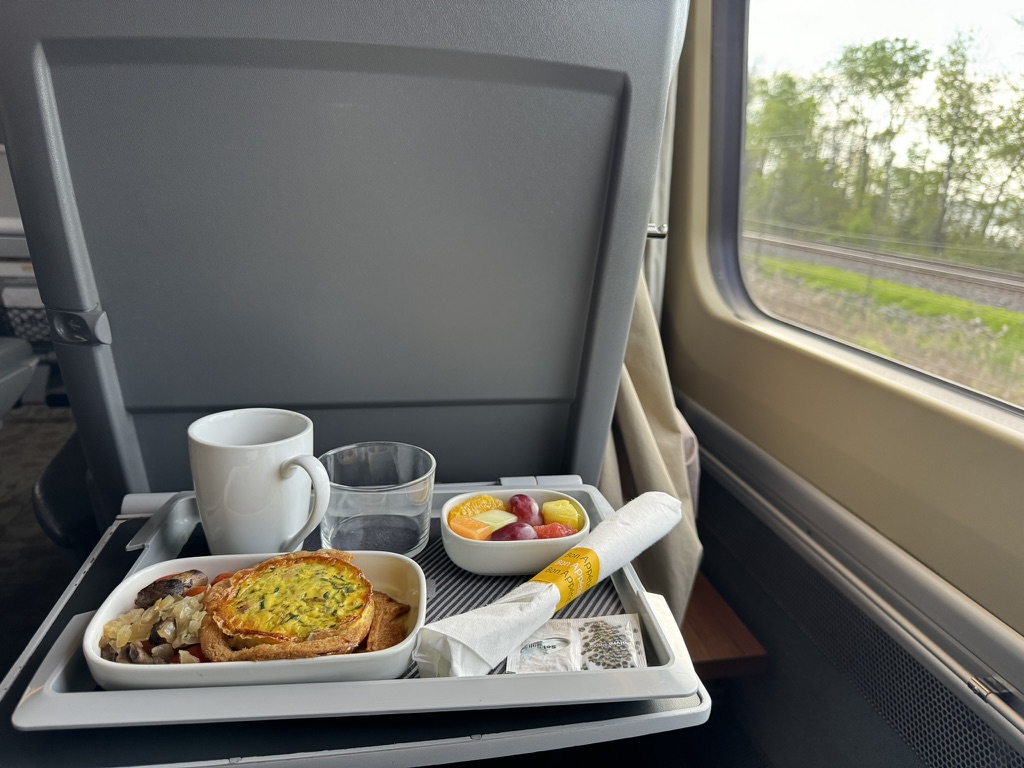
I then traveled from Toronto to Montreal on Canada’s VIA Rail in Business Class. The service and cabin were impressive, though there are certainly better business class trains globally, but that’s a story for another day.
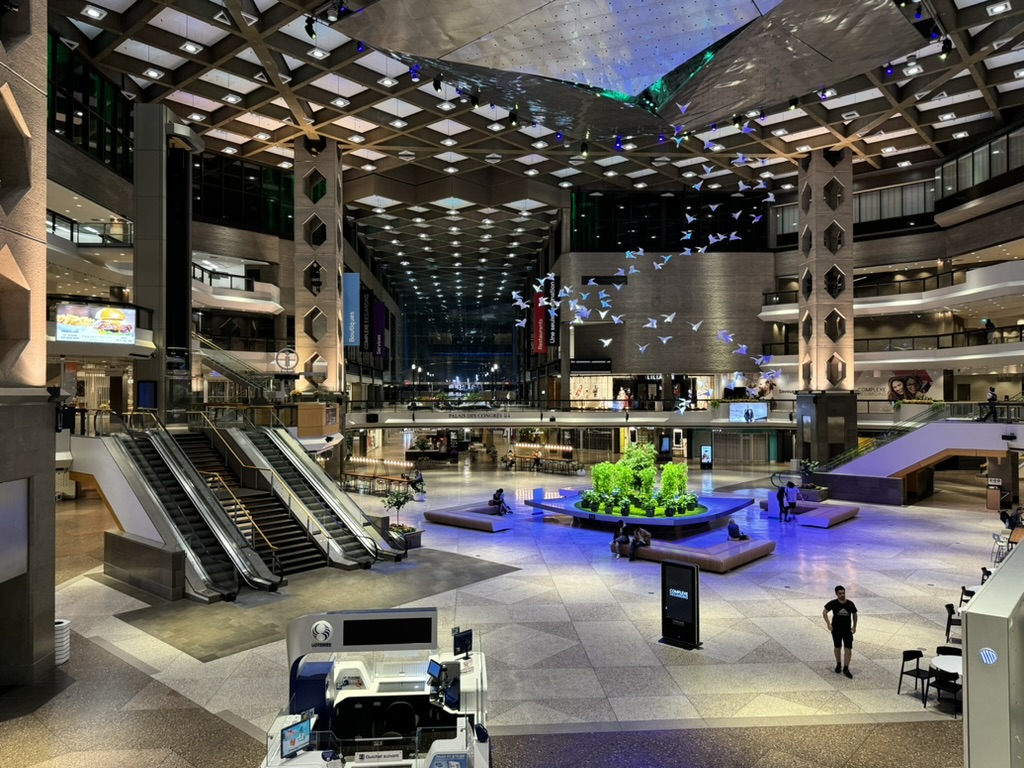
In Montreal, I explored Mont Royal Park where you can get great city views, the touristy area of Old Montreal, and my favorite was the Quartier des Spectacles area with its retro and artistic vibe.
A trip to San Francisco (Segment 3)
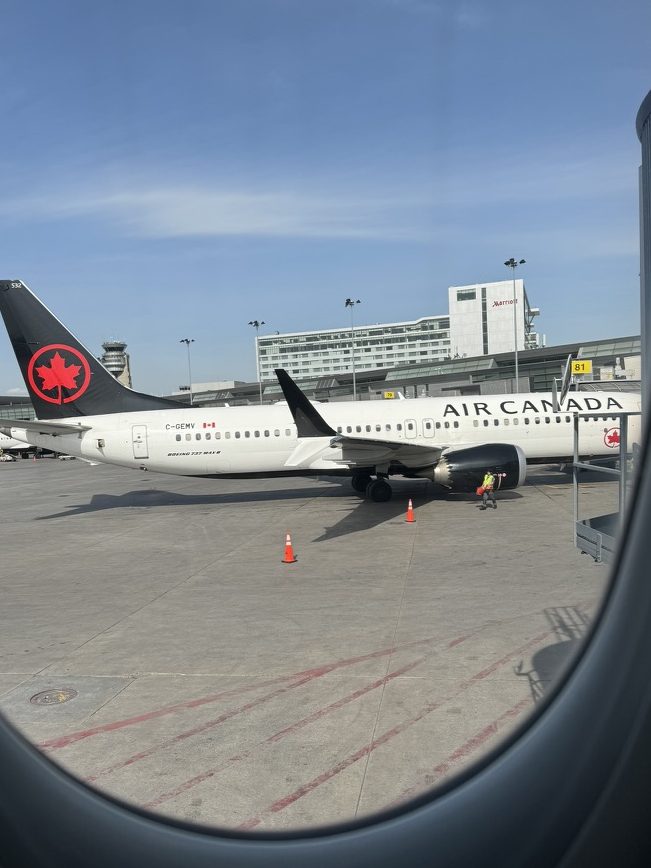
After wrapping up my time in Montreal, I flew to San Francisco on Air Canada Business Class (AC763), operated by a Boeing 737 Max 8.
I initially was dying to use up my orphan Aeroplan points for this YUL-SFO leg, but Aeroplan’s dynamic pricing made it a staggering 100,000+ Aeroplan points. After some analysis, I opted to redeem 29,000 EVA Air miles through Star Alliance Partner redemption instead—a much more cost-effective option thanks to EVA’s fixed pricing system.
Ah…the power of Infinity MileageLands!
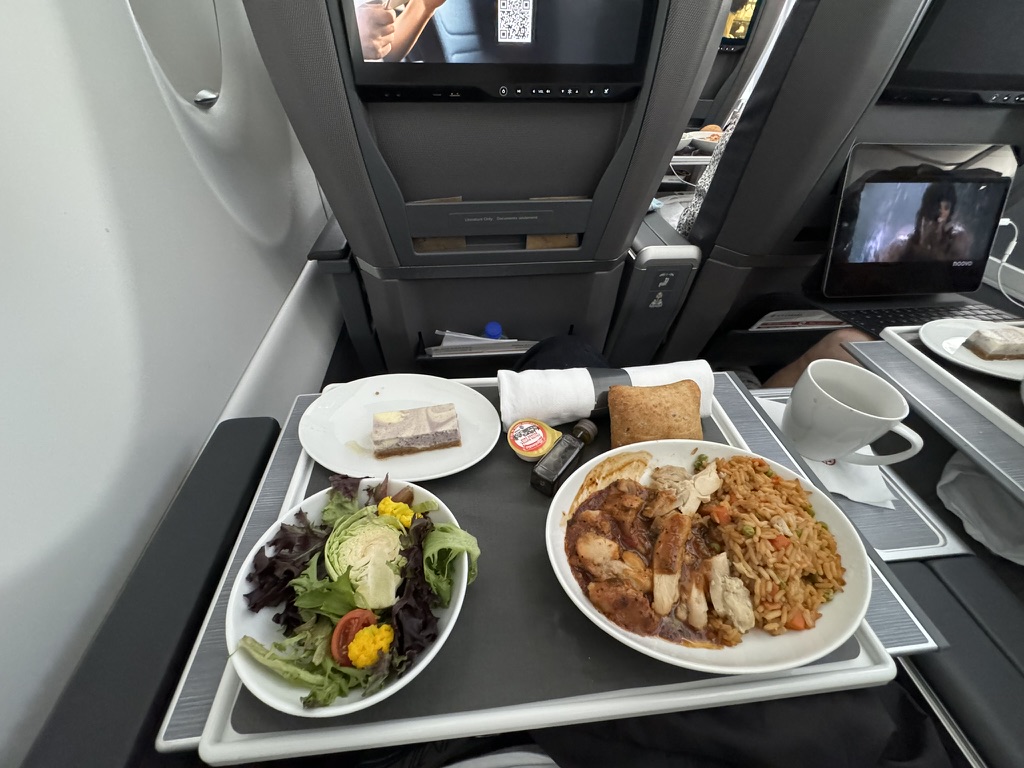
The business class cabin on this flight featured a 2-2 configuration, which, by our usual standards, feels more like Premium Economy. The seats don’t fully recline, but the angle was good enough for a short nap. Overall, the seat was comfortable, and the food was decent for a ~6-hour flight.
| Travel Tip: Sometimes, the best miles to use aren’t the airline’s own miles. Try exploring other alliance and partner award programs—you might be surprised at the discounts (less miles). |
What I did in San Francisco
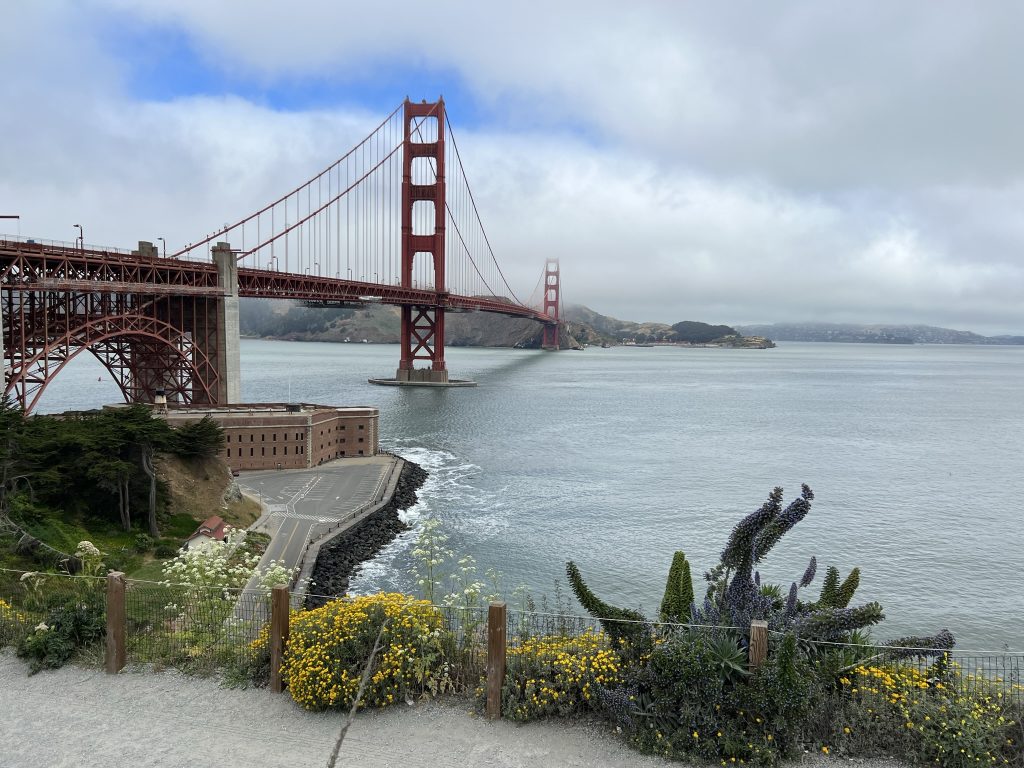
This was my second visit to San Francisco, a short 3-day, 2-night stay. I explored new spots like Apple HQ in Cupertino and the Computer History Museum, and revisited the iconic Golden Gate Bridge area.
End of Part 1
That wraps up Part 1 of my trip report, covering 3 segments of my trip. I hope you’ve found some useful tips and a bit of inspiration for your own travels.
Check out Part 2 of this trip report here, where more adventures and insights await.