
Malaysia Airlines A350 in 2026: Still Worth Flying?
Hello again, this is Peter, Chief Travel Officer of BolehMiles.
I recently travelled to Europe with my parents and took this Malaysia Airlines A350 flight home from London to Kuala Lumpur. It was their first trip to Europe, and perhaps their only one, so naturally I wanted to give them the best experience possible.
I had originally pieced together a Qatar Quad-Suite itinerary using multiple redemption tricks, but the Middle East situation derailed that plan and landed us on this Malaysia Airlines’ flagship A350 instead.
The Booking
During the Middle East crisis in April 2026, everyone was scrambling to rebook cancelled flights.
Award space was super scarce and I definitely paid more than I normally would. Even so, I was thankful to secure 3 tickets home (London-Kuala Lumpur on MH3)
- 2x Business, each for 89,000 Asia Miles + RM2575
- 1x Economy Flex Revenue – RM2900 one-way. Enrich Points upgrade to Business at 70,000 Enrich Points
Of course, this goes against many of the strategies I usually recommend on this blog, but in this case, I didn’t have much of a choice. Sometimes, life doesn’t wait for the perfect redemption.
Flying a Piece of Malaysia Airlines History
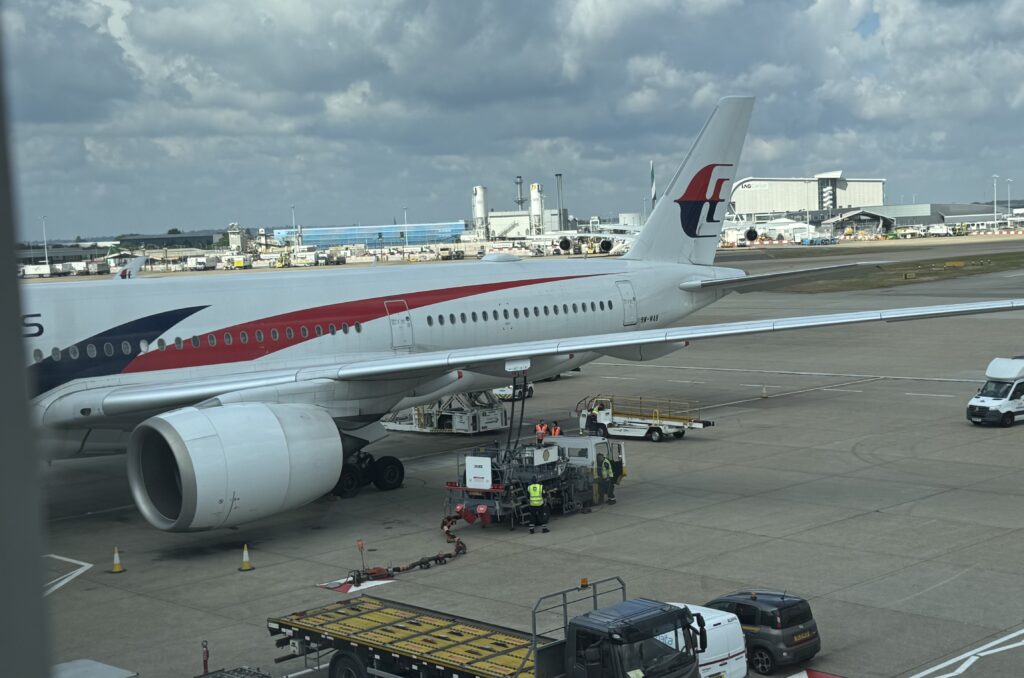
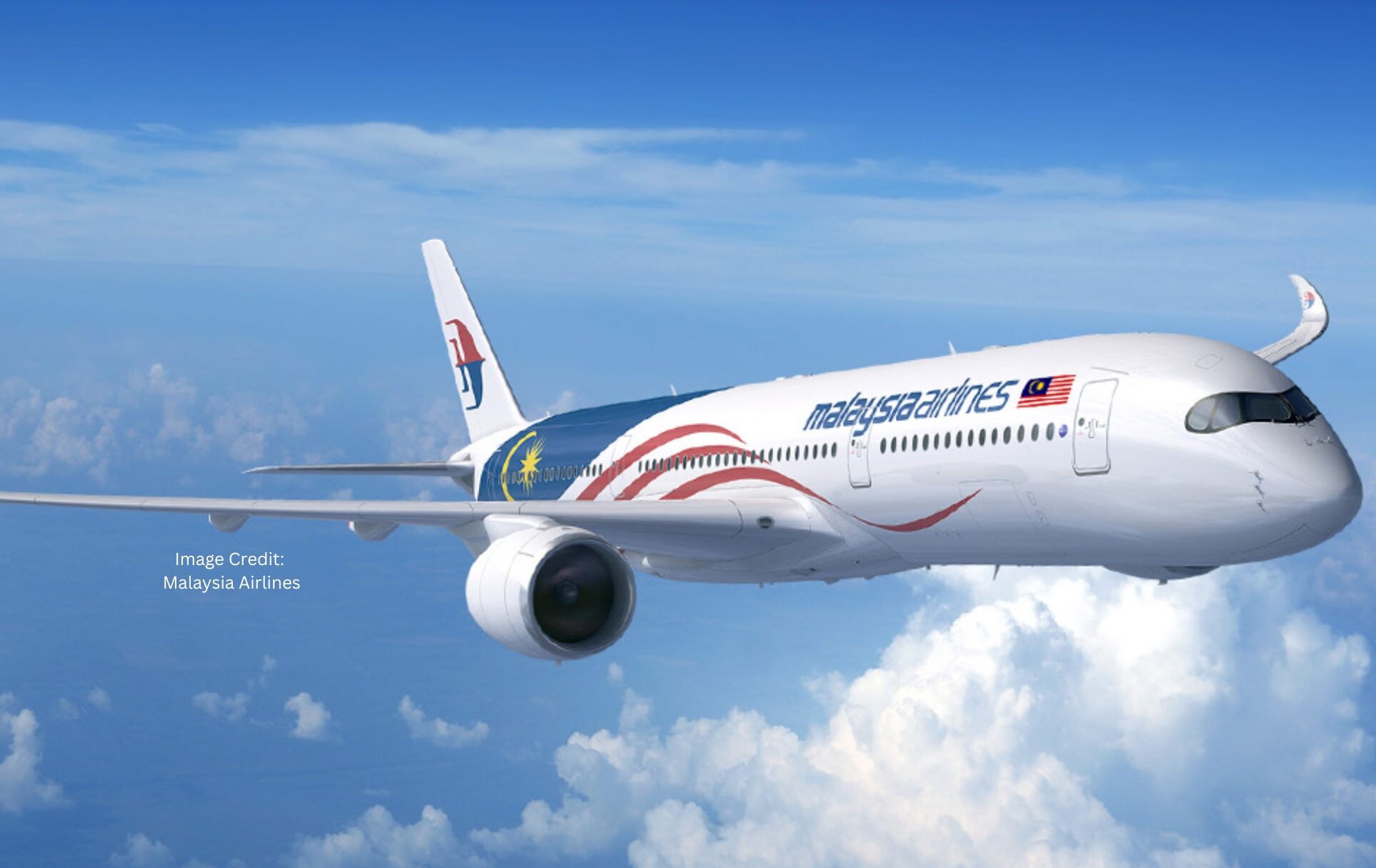
I flew MH3 on the Airbus A350-900 with registration 9M-MAB. This aircraft holds a special place in Malaysia Airlines’ history.
Malaysia Airlines took delivery of this 9M-MAB in late 2017, the very first Airbus A350 in its fleet, and it arrived at an important time for the airline.
The airline was recovering from financial losses and needed a replacement for the old Airbus A380. Compared to the A380, the A350 is much more fuel efficient and easier to operate profitably.
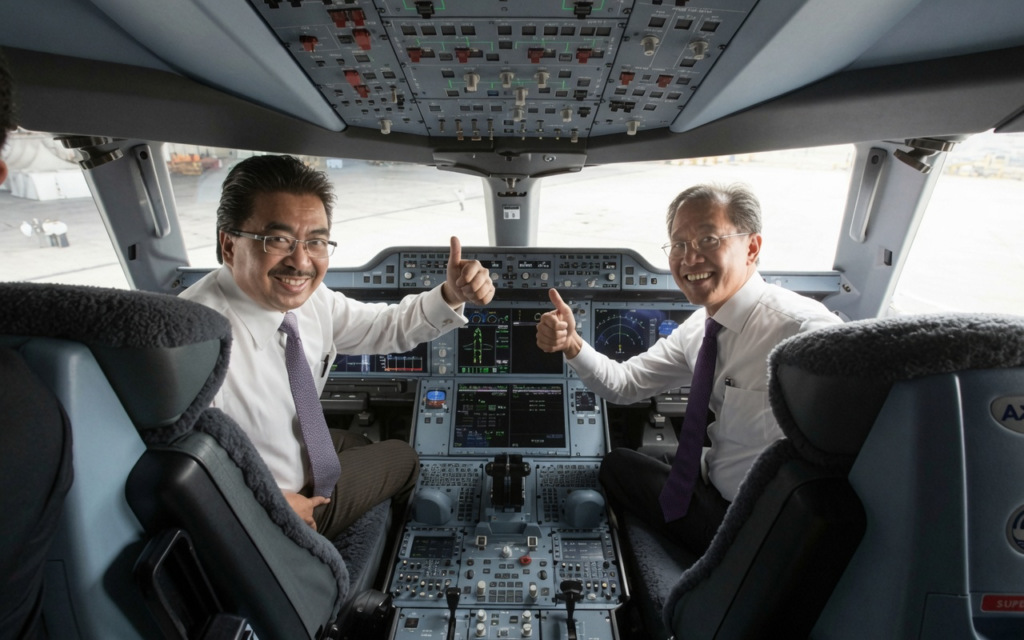
Today, nearly a decade later, MH operates a fleet of seven Airbus A350-900 aircraft, serving its longest routes including London, Paris and selected services to Guangzhou and Tokyo.
While newer A330neo have entered the market, the A350 remains the premier aircraft to fly long haul on Malaysia Airlines.
Cabin Tour
I stood at the boarding gate like a complete weirdo for about 10 minutes before boarding commenced. The moment boarding started, I power-walked onto the aircraft so I could get 2 precious minutes of cabin photos before everyone else boarded.
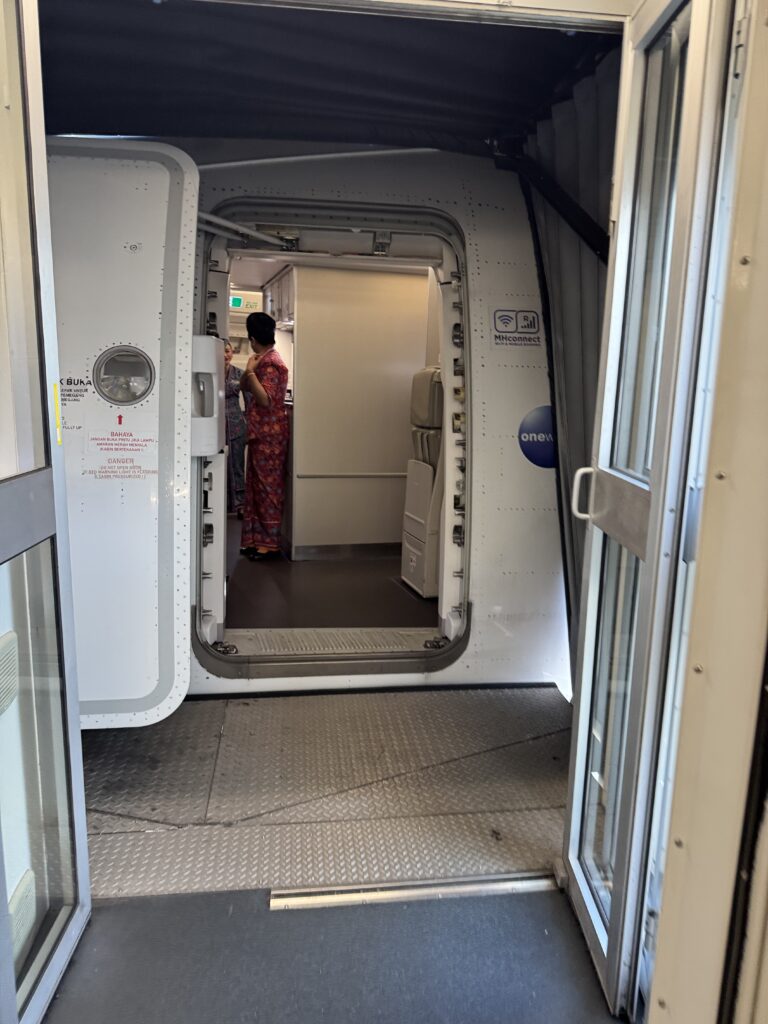
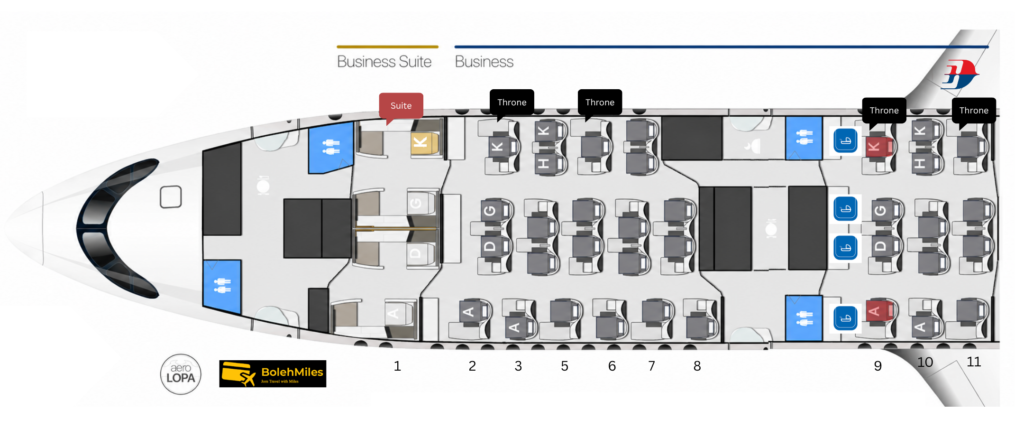
Turn right upon boarding and you’ll find the Business Suite cabin, a tiny four-seat section at the front of the aircraft.
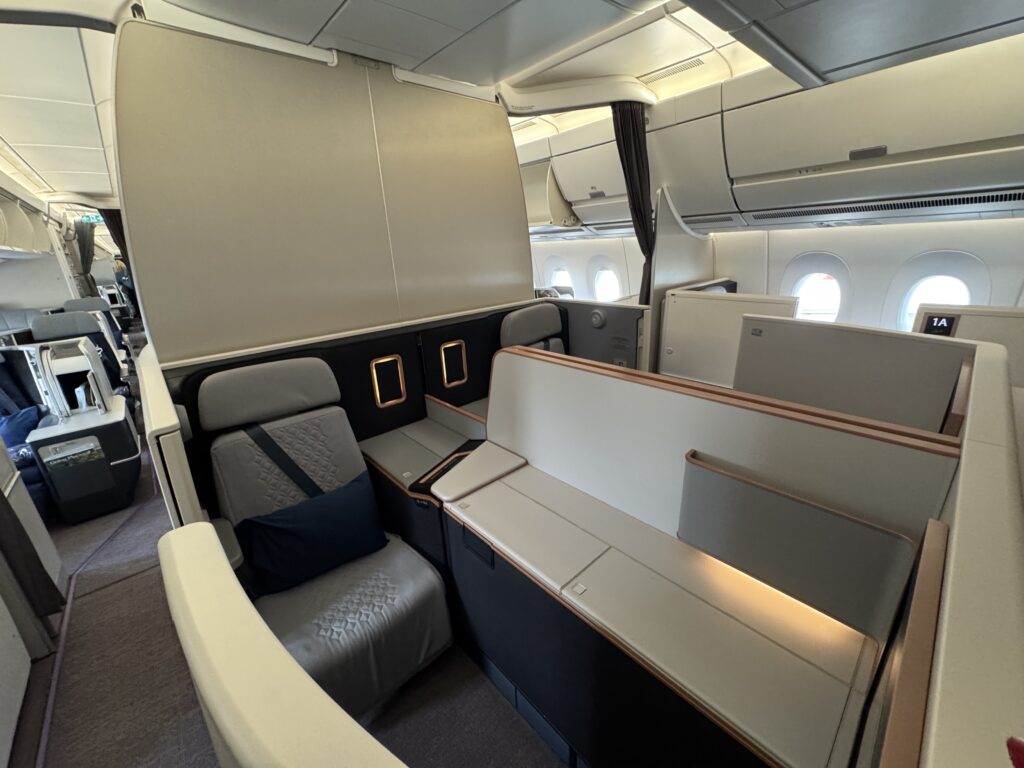
Interestingly, these seats were originally marketed as First Class when the A350 entered service in 2018.
Malaysia Airlines later retired the First Class brand and rebranded the cabin as Business Suite to cater to business traveller demand, because corporate policies often don’t allow employees to fly First Class.
The seat itself, however, remains largely unchanged.
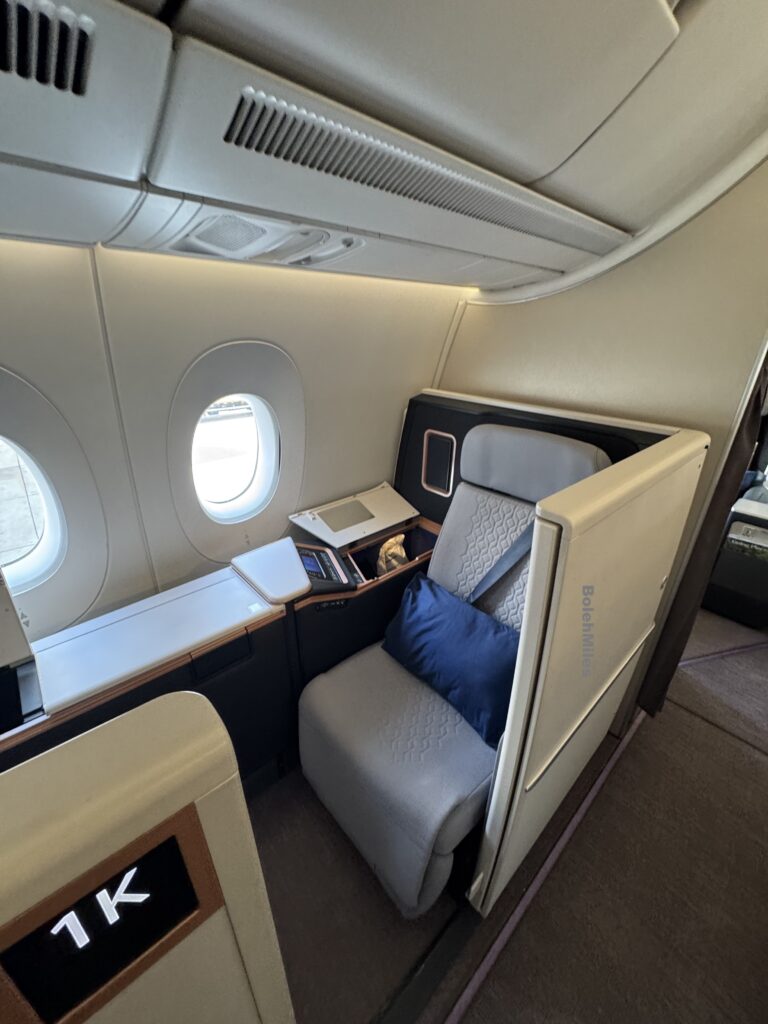
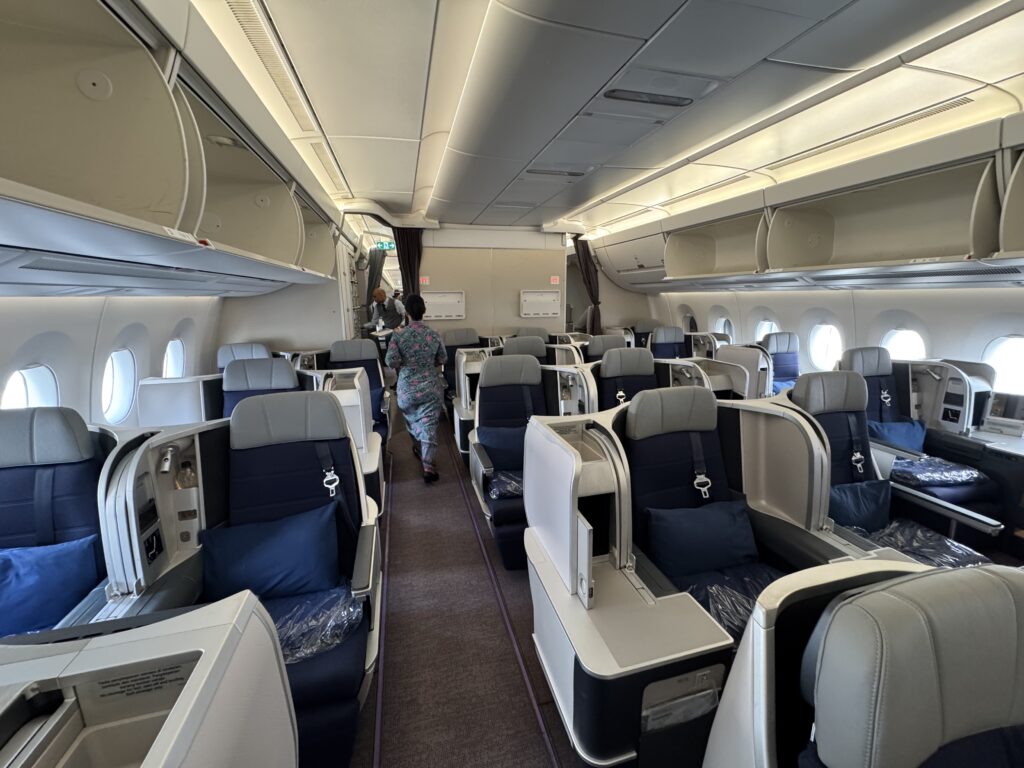
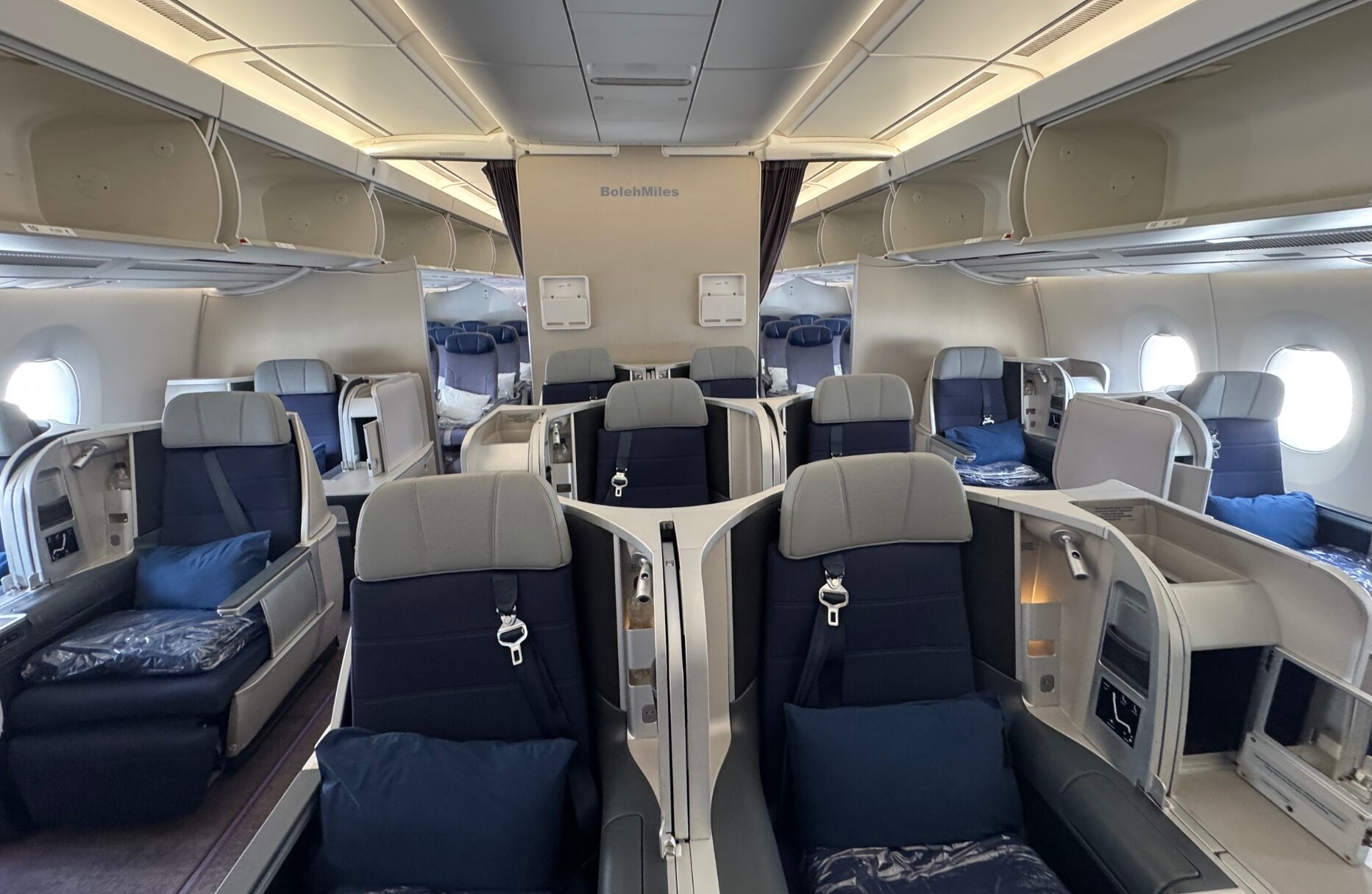
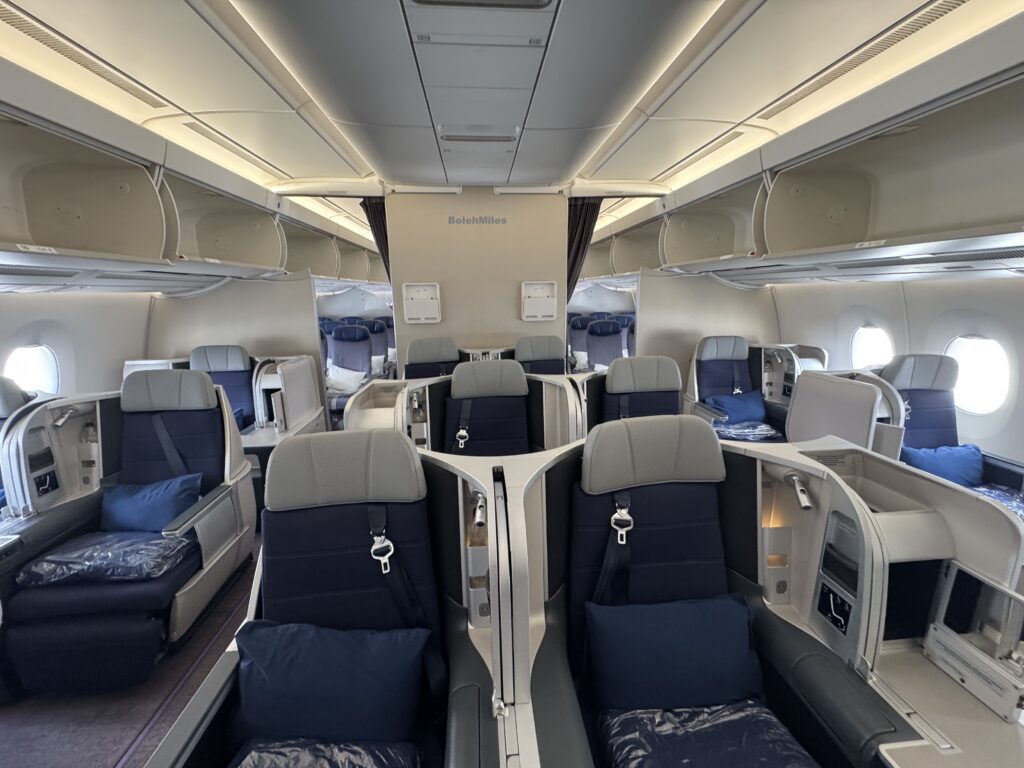
The Business Class cabin is split into two sections, forward section with 22 seats and back-section with 13 seats with staggered 1-2-1 and 1-2-2 configuration, similar to the A330.
For this flight, I ended up in the smaller back-section of Business Class. In theory, it is the quieter cabin because the passenger count is lower, which is better for the elderly.
At least, that was how I coped mentally after finding out the forward cabin was sold out.
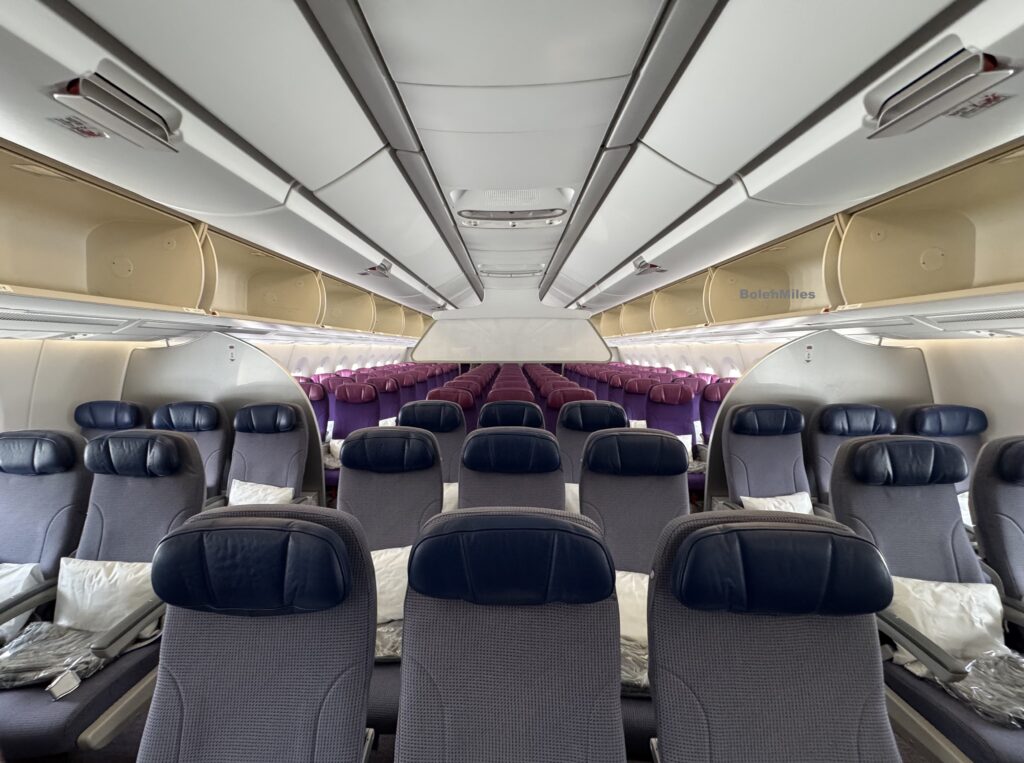
Right behind the Business Class cabin is an interesting section: Extra Legroom Economy Class.
Malaysia Airlines still labels this section as Premium Economy on parts of its website, but they are now sold as Economy Class that you can upgrade for ~RM500 for this route, which I think is a good deal for a 13-hour flight, since you get significantly more legroom.
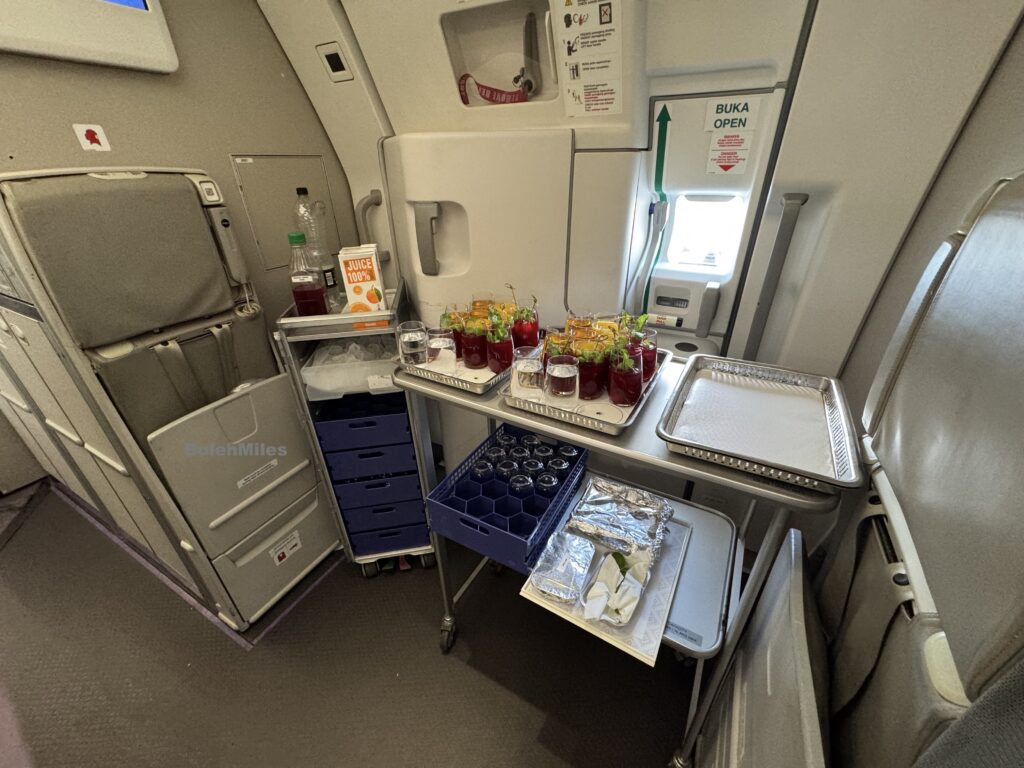
The Cabin Experience
My first impression was that the cabin was still well maintained for its age in 2026.
If Thai Airways’ 777-300ER is the guy who went grey early, this MH A350 is the older uncle who still has plenty of black hair left.


The Seats
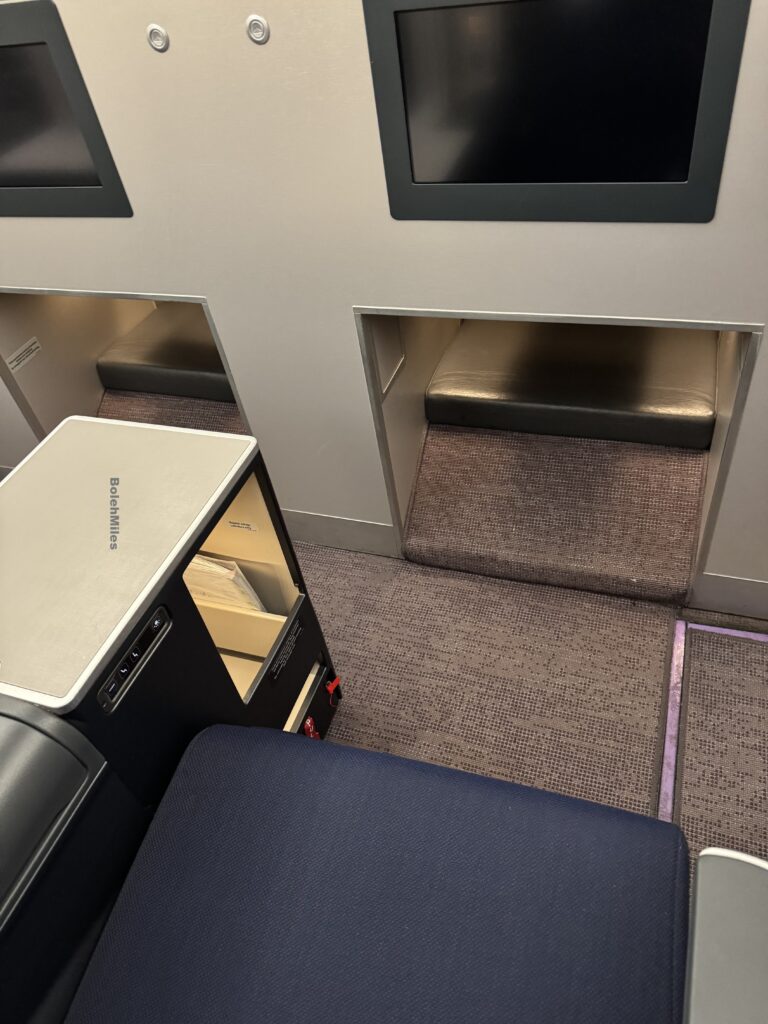
Similar to the A330-300 Business Class cabin, the four Throne Seats (2K, 5K, 9K and 11K) are arguably the most desirable seats onboard.
These Throne Seats come with two side counter/storage space and occupy roughly the same space of two standard seats next to it.
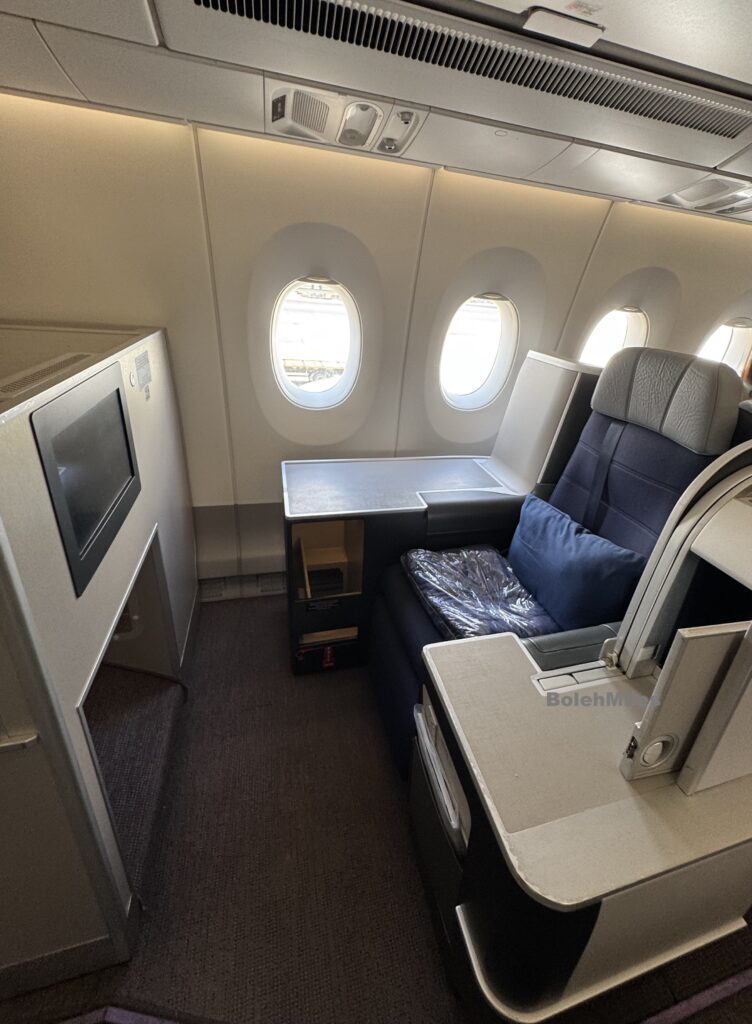
The bulkhead Throne Seats (2K and 9K) enjoy a larger footwell than the rear Throne Seats (5K and 11K).
While both offer the same seat width, the extra space around your feet can make the bulkhead seats more comfortable in bed mode.

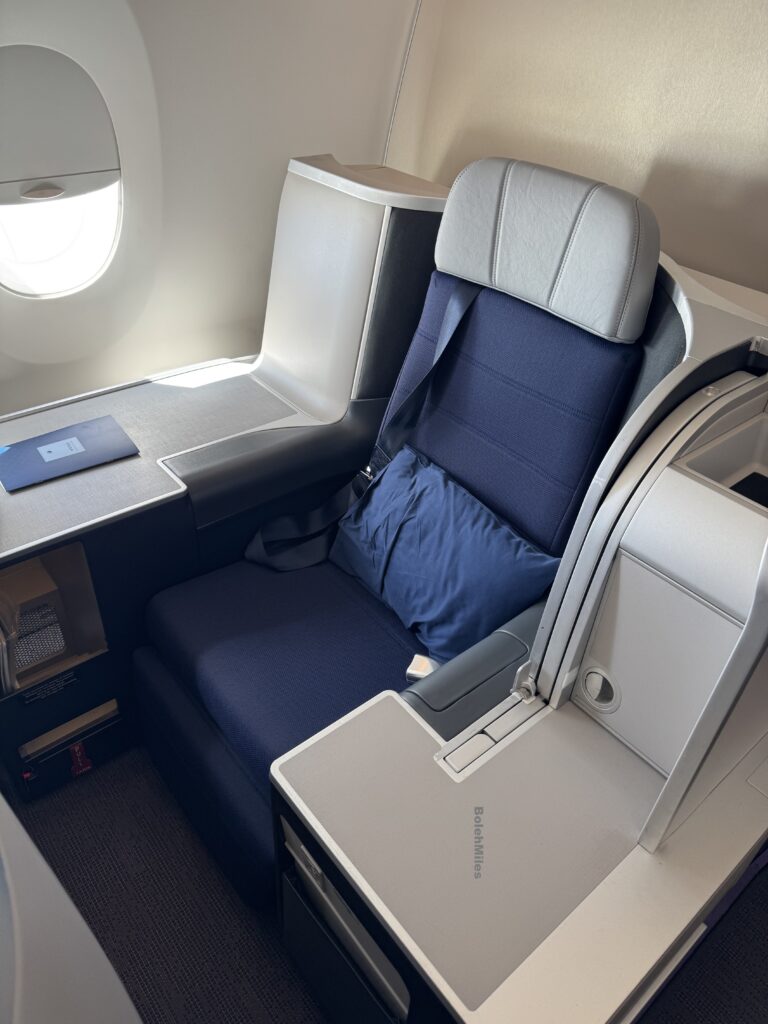
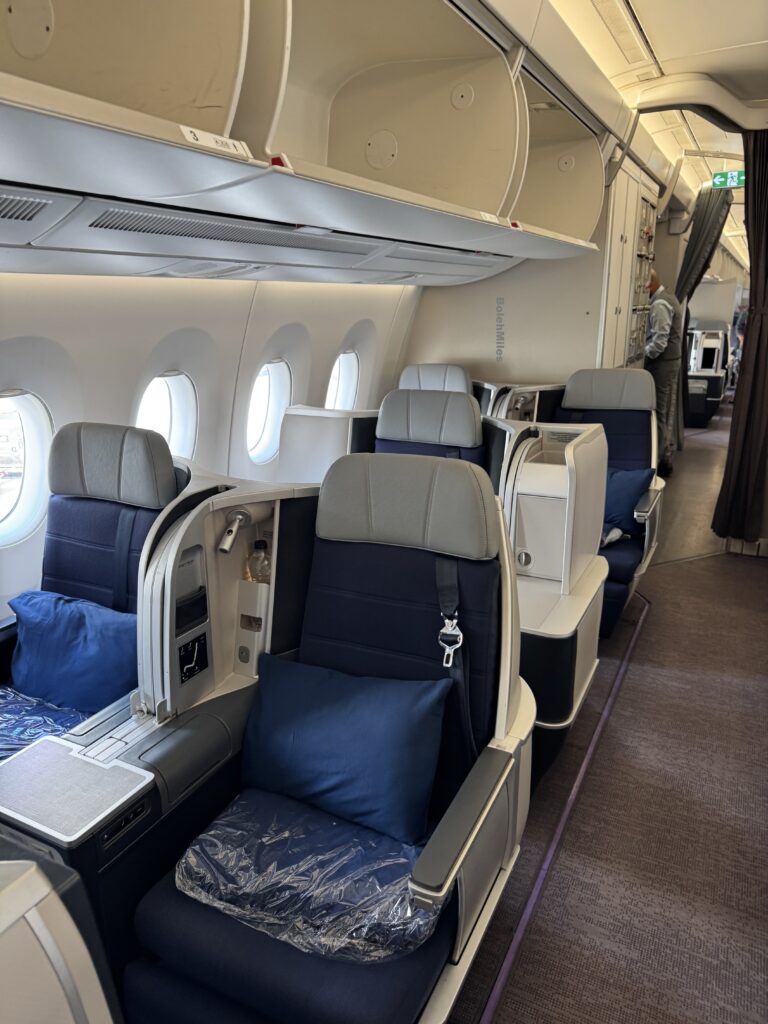
If Throne seats are not available, the standard solo Business Class seats are still a solid choice.
While they don’t occupy as much space, they offer good privacy and more than enough storage for a long-haul flight.
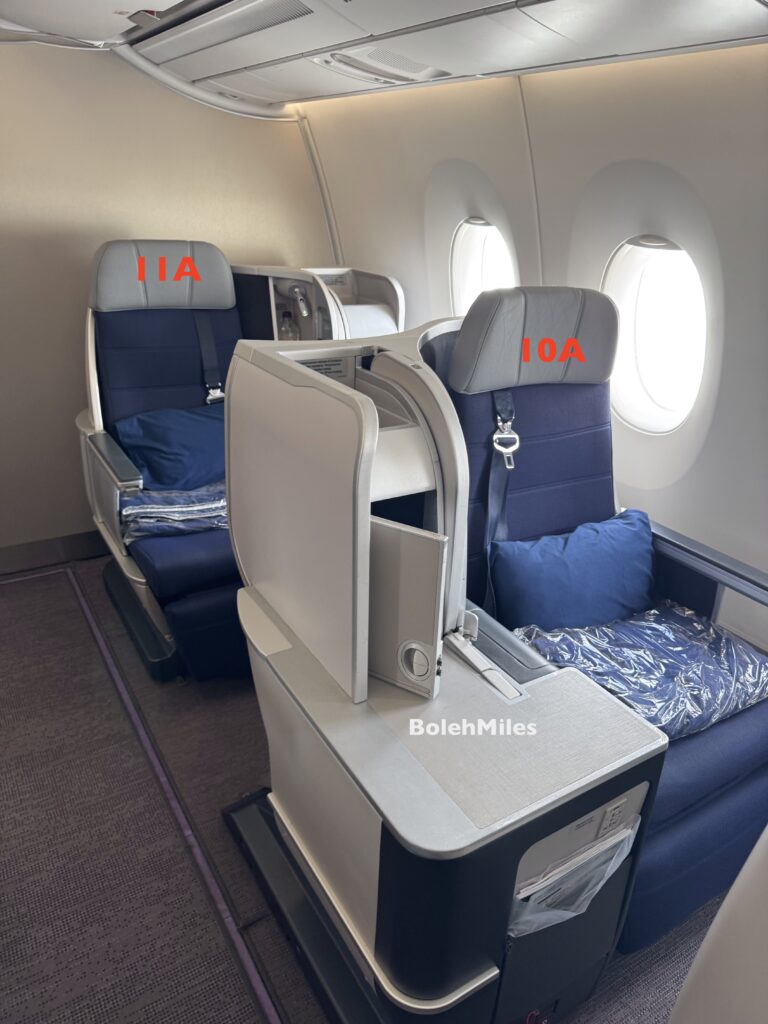
If you’re traveling solo, try to pick a window-side seat that sits closer to the window rather than the aisle. For example, I’d take 10A over 11A any day, like above.
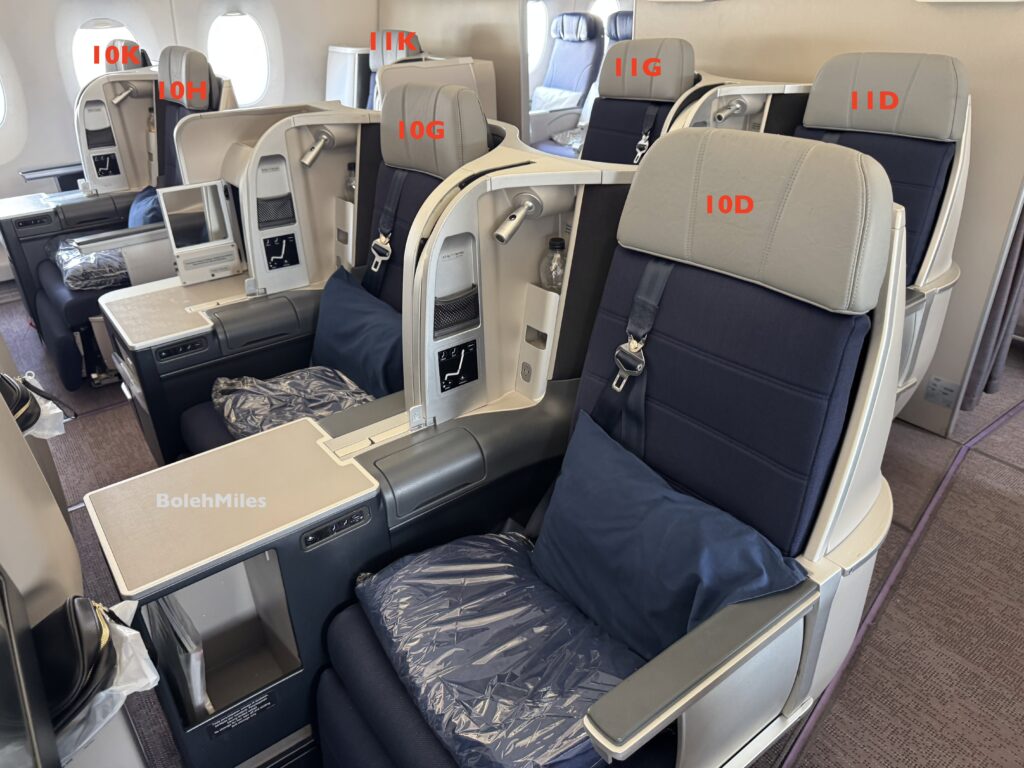
Couples can pick the window-side pairs such as 10K and 10H if they prefer the view.
Otherwise, I’d recommend middle pairs like 10D and 10G, which come with more space than seats such as 11D and 11G, like above. Alternatively, bulkhead middle seats like 9D and 9G is even better if you want the large footwell.
Recommended Seats
| Good Solo Seats | Good Couple Seats |
|---|---|
| Throne – 2K, 5K, 9K, 11K | Window Pair – 3H/3K, 10H/10K |
| Normal – 3A, 6A, 10A. 8A is good too but no overhead storage |
Centre Pair – 2D/2G, 9D/9G |
Seat Controls
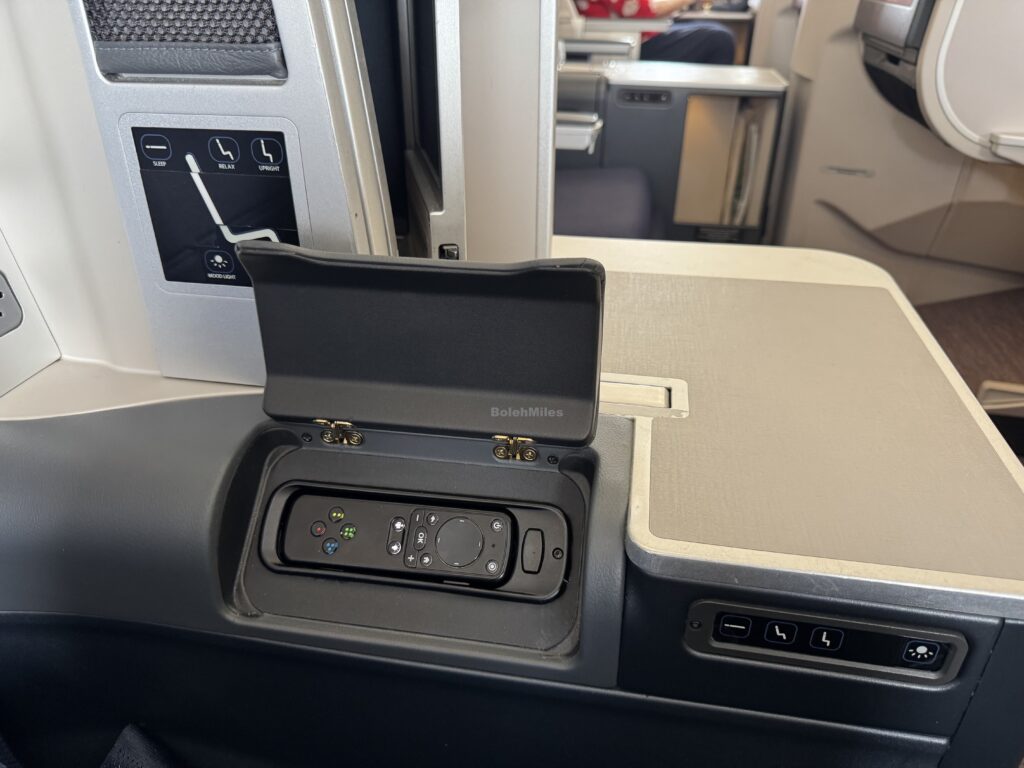
The seat controls and IFE controller were both well maintained and worked fine despite their age.
Unlike the A330-300, however, the massage function is absent. Not a deal-breaker, but my back certainly noticed.
The Food
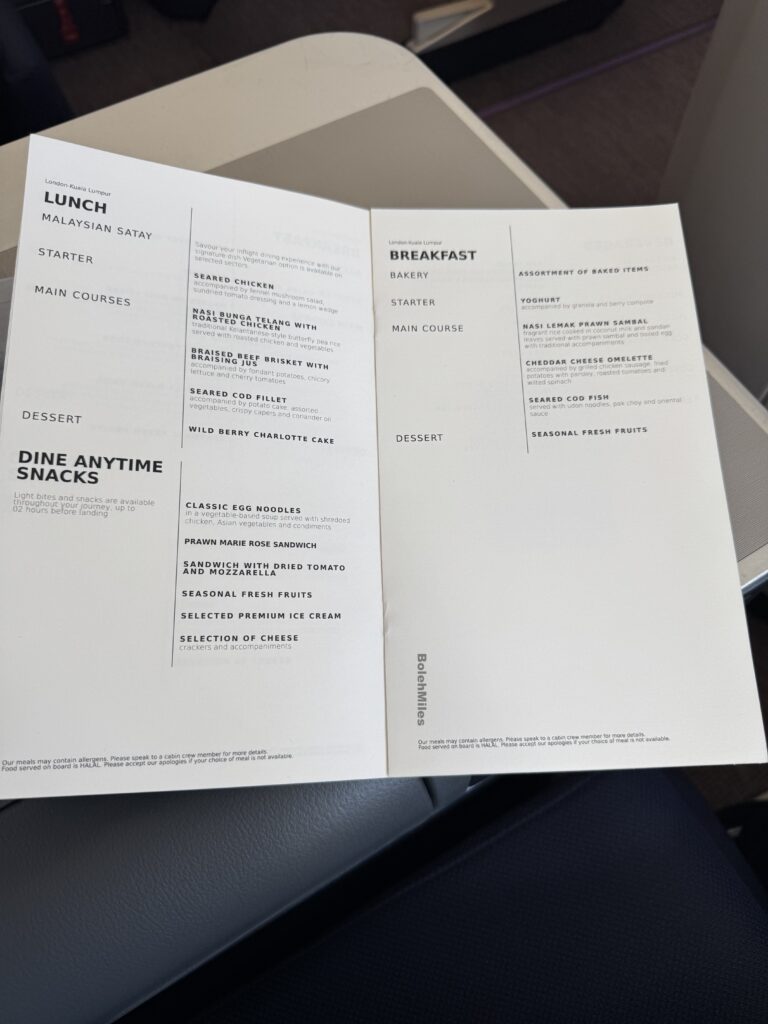
Chef-on-Call is only available on outbound flights from Kuala Lumpur. As this was an inbound flight from London, I had to choose from the onboard menu instead.
Here’s what was on offer:
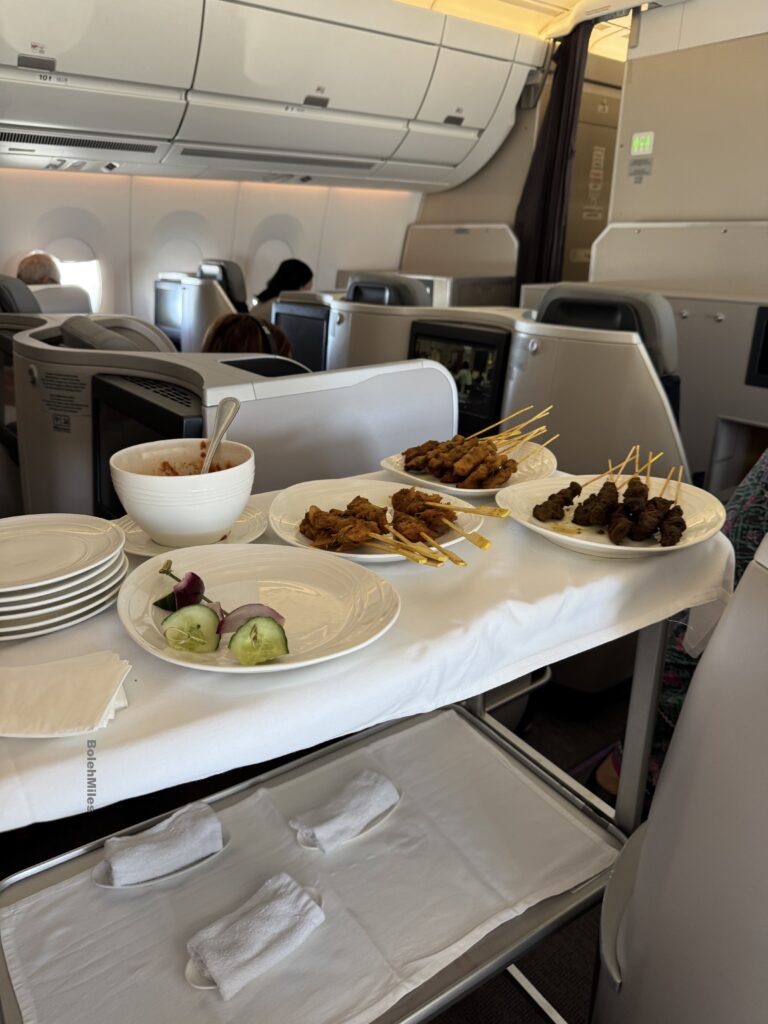
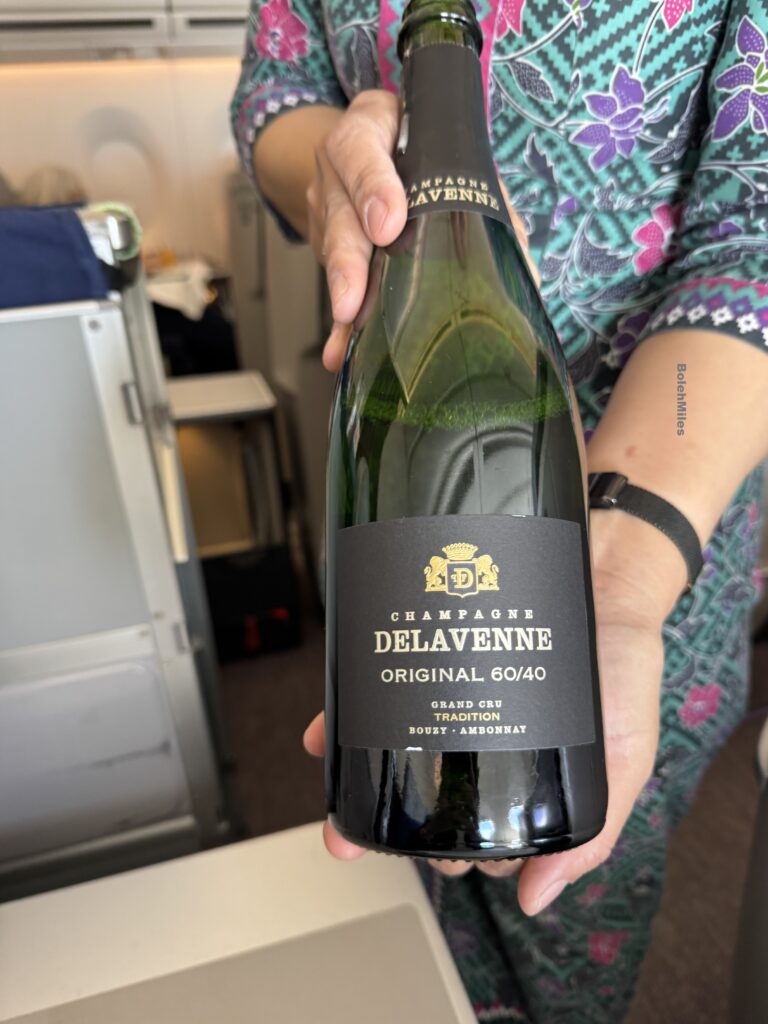
I started the flight with the obligatory satay and a glass of champagne.
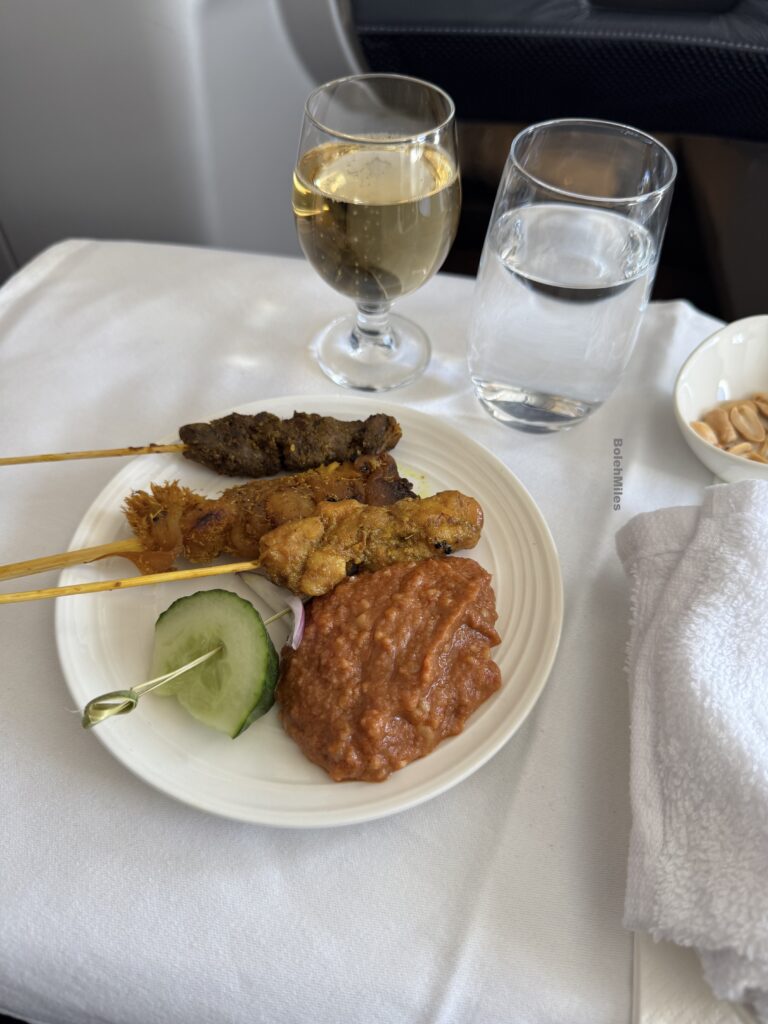
Voices in my head began debating whose satay reigns supreme: Malaysia, Singapore, or Garuda. I wisely chose not to participate.
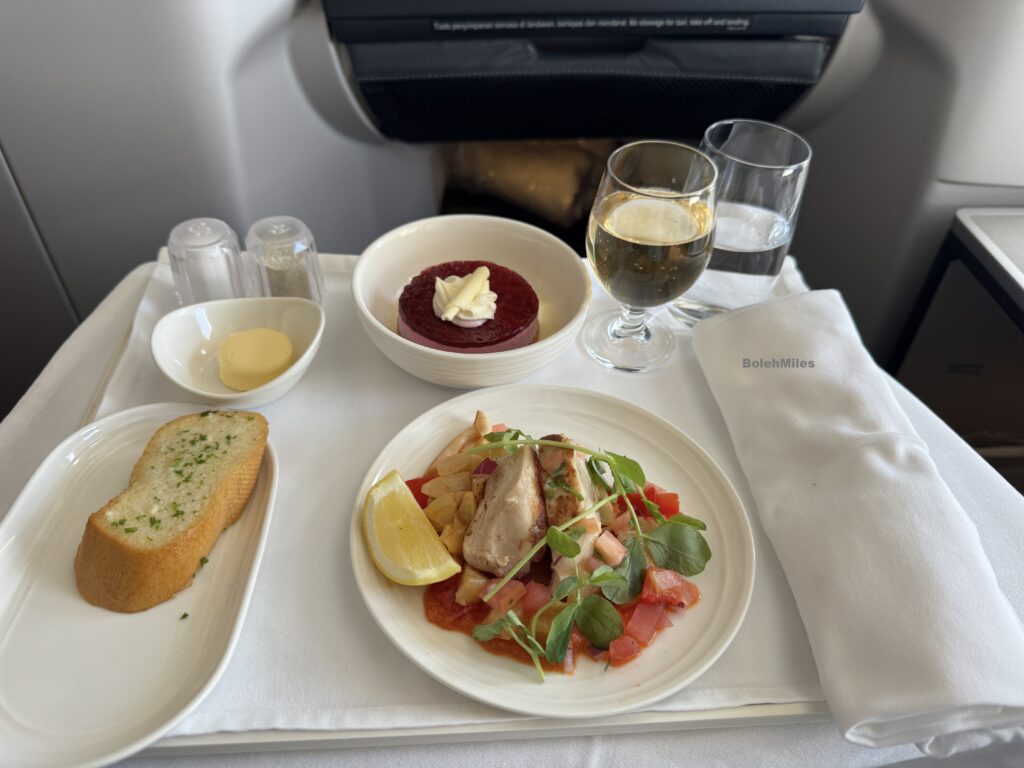
The starter was 2 big pieces of seared chicken, which I thought was on the heavier side for a starter.
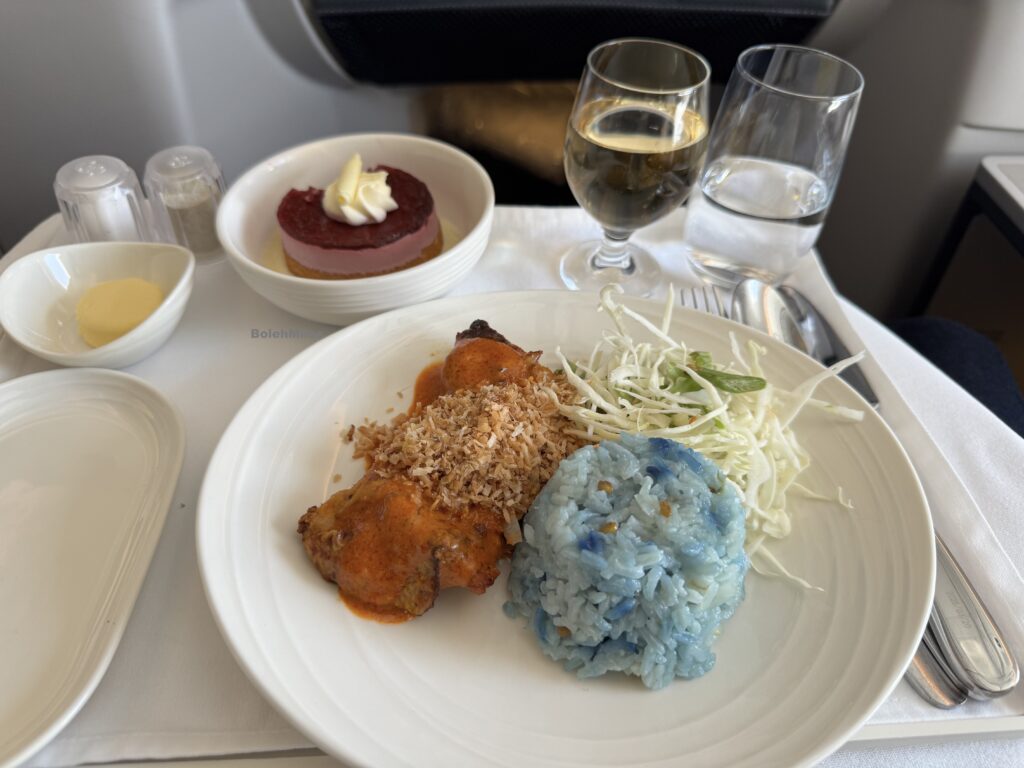
The main course, Nasi Bunga Telang with Roasted Chicken was tender and succulent.
While the plating wasn’t trying to win any awards, it was hearty comfort food that felt just right for the journey home.
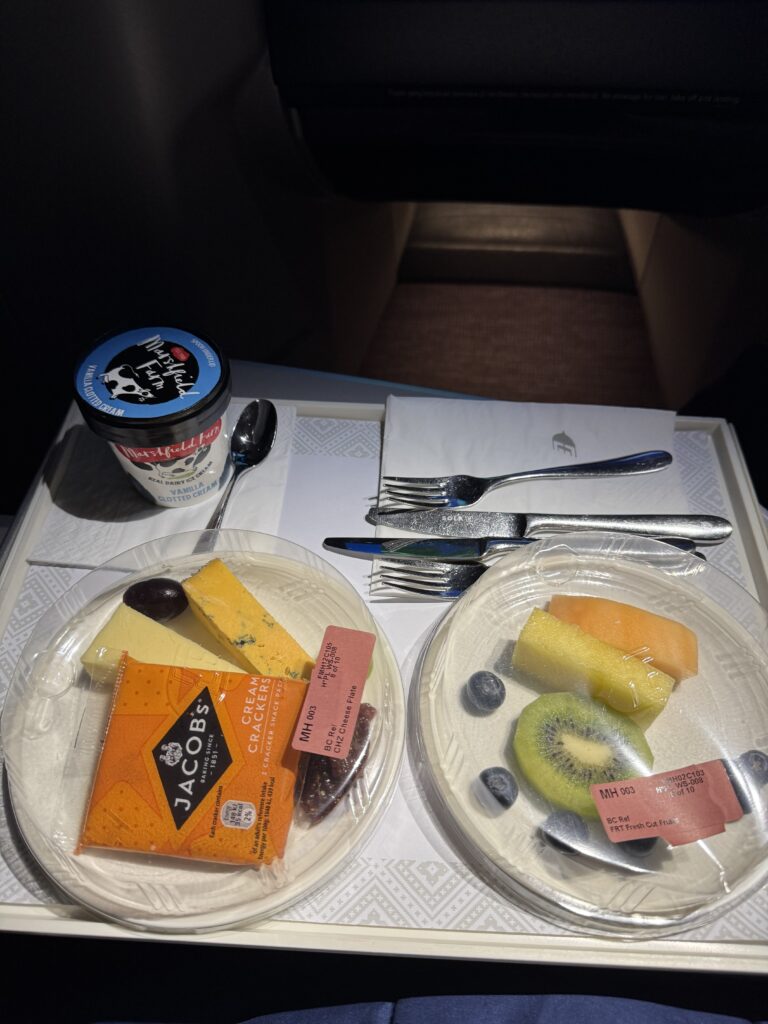
Mid-flight, I ordered some fruit and ice cream from the Dine Anytime menu. On such a long-haul flight, it’s nice to know a snack is never too far away.
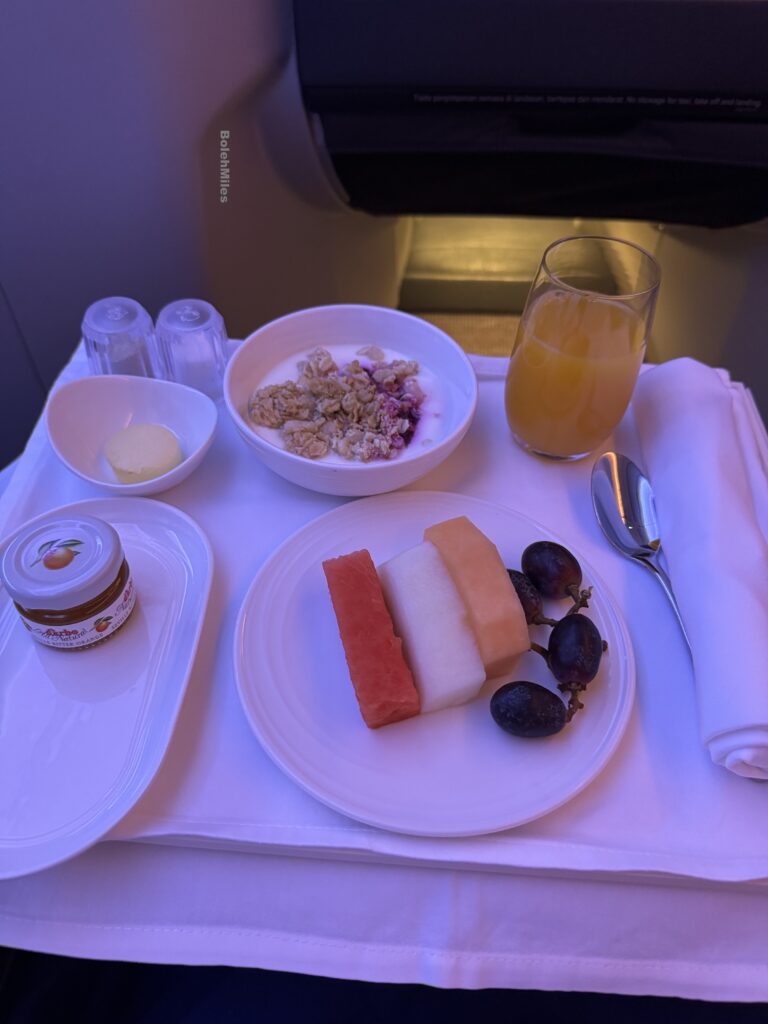
For breakfast, the meal service began with fruit.
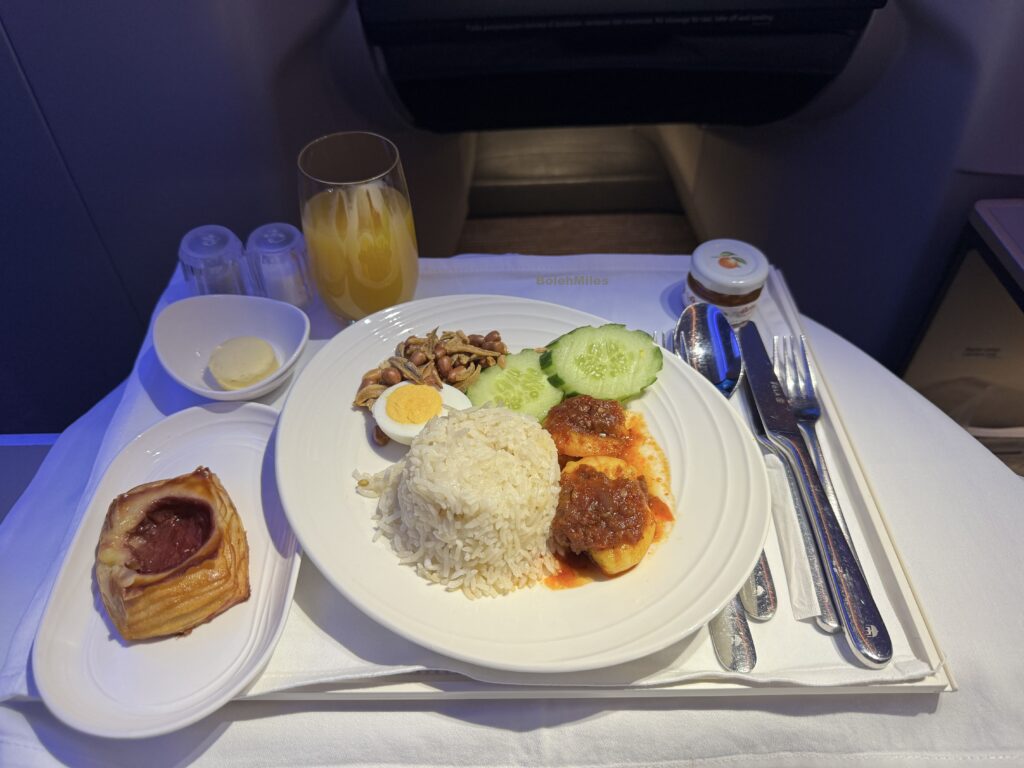
My favorite Malaysian breakfast Roti Kanai Canai was not on the menu, so I opted for the Nasi Lemak with prawns instead.
The prawns weren’t spectacular, but after spending half a day crossing continents, it’s only fair to cut them some slack on the freshness.
The IFE, WiFi and Power
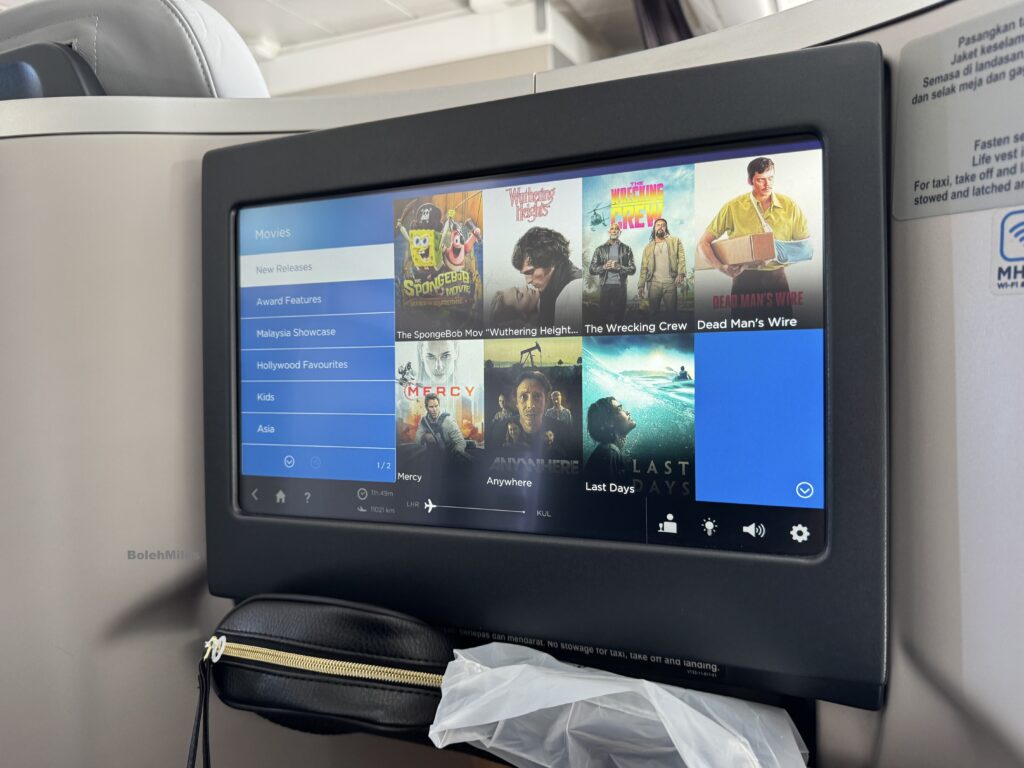
The IFE is 16-inch touchscreen at 1080p, which is ok lah…still serviceable. You can check the movies & shows available here.
The current A330neo improves on this with a larger 17.3-inch 4K display, making this older screen feel somewhat dated by comparison.
These days, I rarely use the IFE, preferring to either work on my laptop or catch up on shows I’ve pre-downloaded to my iPad.
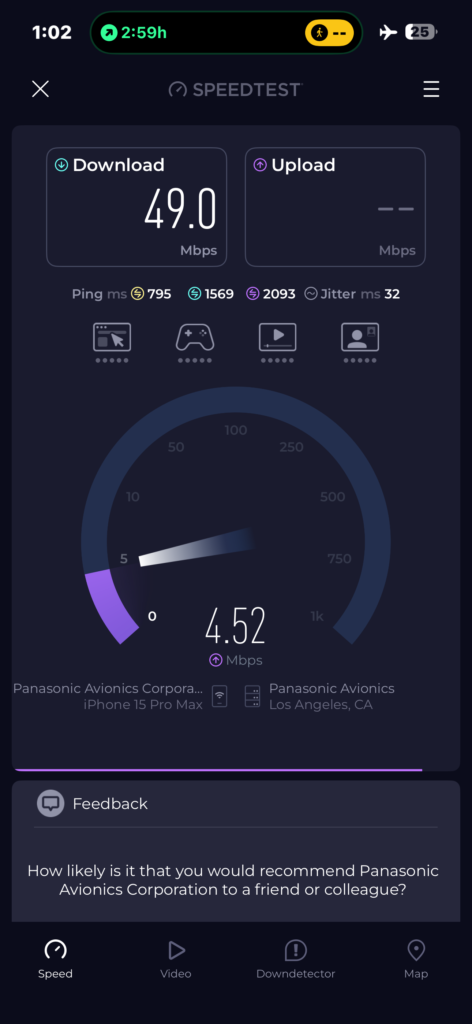
The Wi-Fi clocked in at 49 Mbps download and 4.5 Mbps upload on Panasonic Avionics.
The speeds were decent, but the connection dropped out often enough to remind me this isn’t Starlink. Hopefully, Malaysia Airlines will consider upgrading to Starlink in the future.
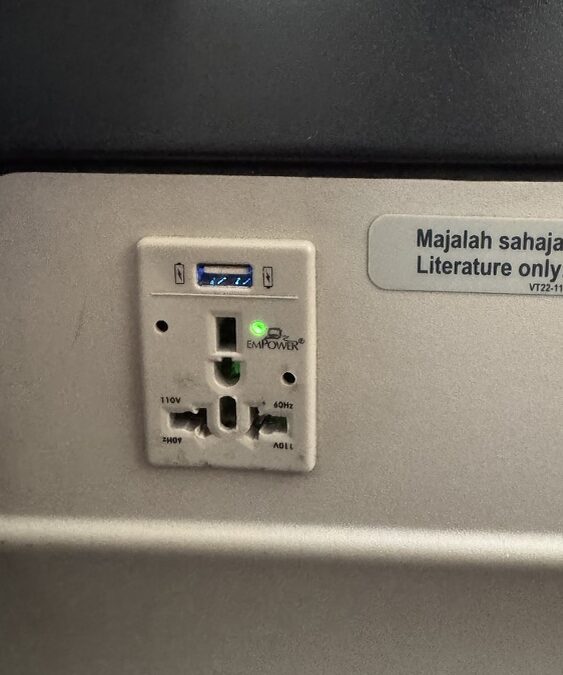
The seat comes with a universal AC outlet and USB-A port. There’s no USB-C, which may disappoint travellers with a strong Type-C personality.
The Amenity Kit
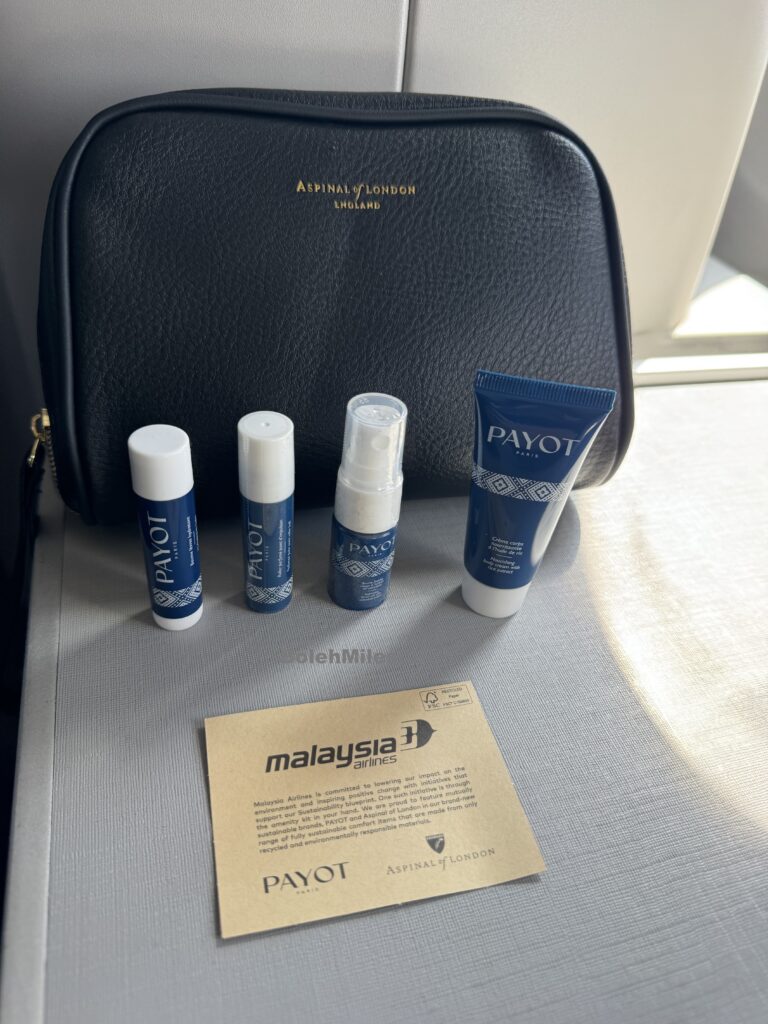
The amenity kit was by Aspinal of London and stocked with Payot Paris products, which are apparently environmentally friendly.
Personally, I rarely use amenity kits beyond the occasional facial mist.
The Sleep
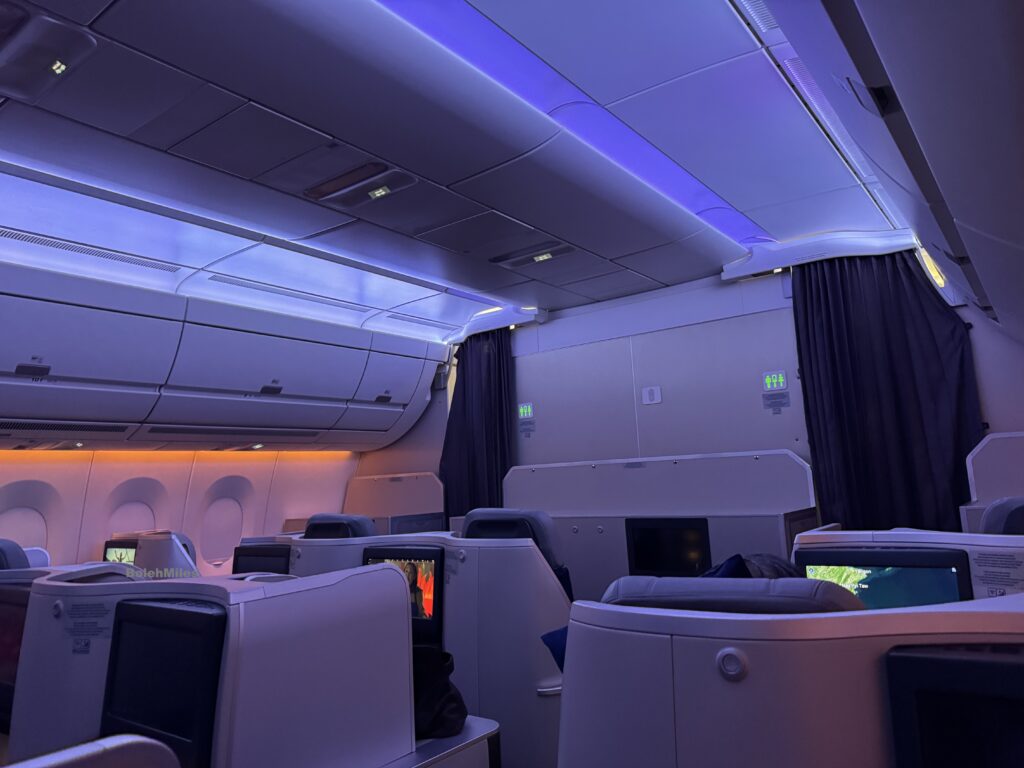
A350s like this have high ceilings thanks to the absence of overhead storage above the centre seats, which helps reduce the feeling of claustrophobia, especially during sleep.
The lighting is fully dimmed when it’s time to sleep, then gradually brightened when it’s time to wake up, making it easier for the body and soul to ease into a new time zone.

For the seats in bed mode, I noticed a small gap around the lumbar area. It felt a little odd on my back at first, though it didn’t affect my sleep.
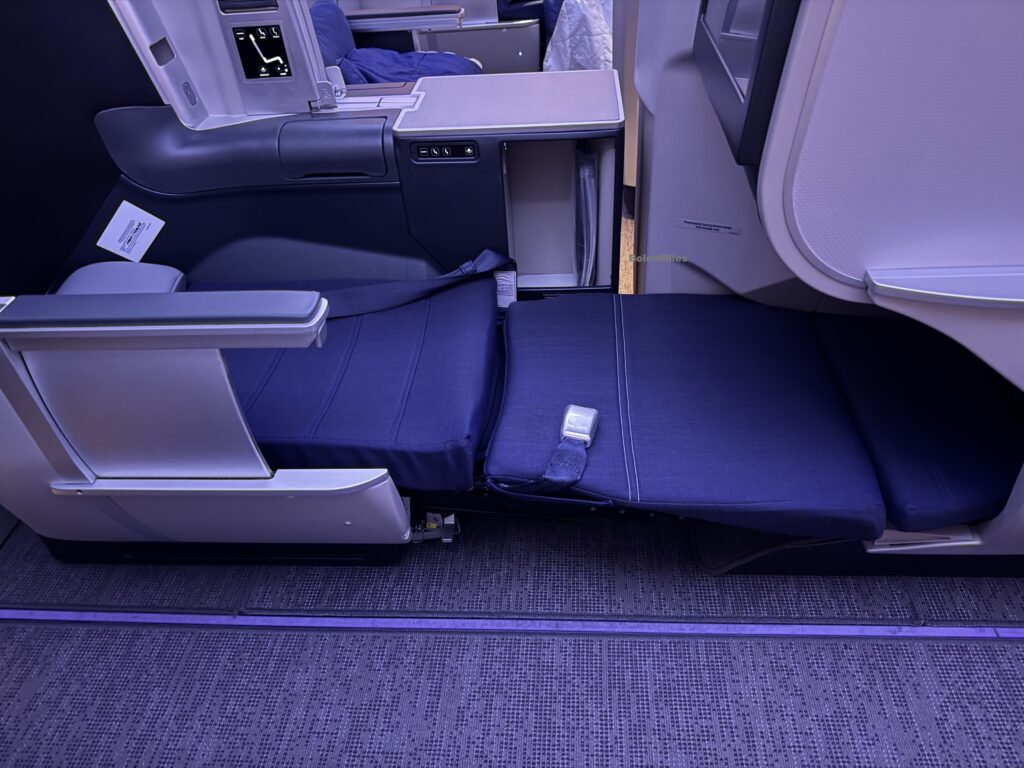

Since I was seated in throne seat 11K and I’m a side sleeper, the tight footwell made leg placement a little tricky. That said, I still managed to get about 3 hours of sleep.
The Toilet
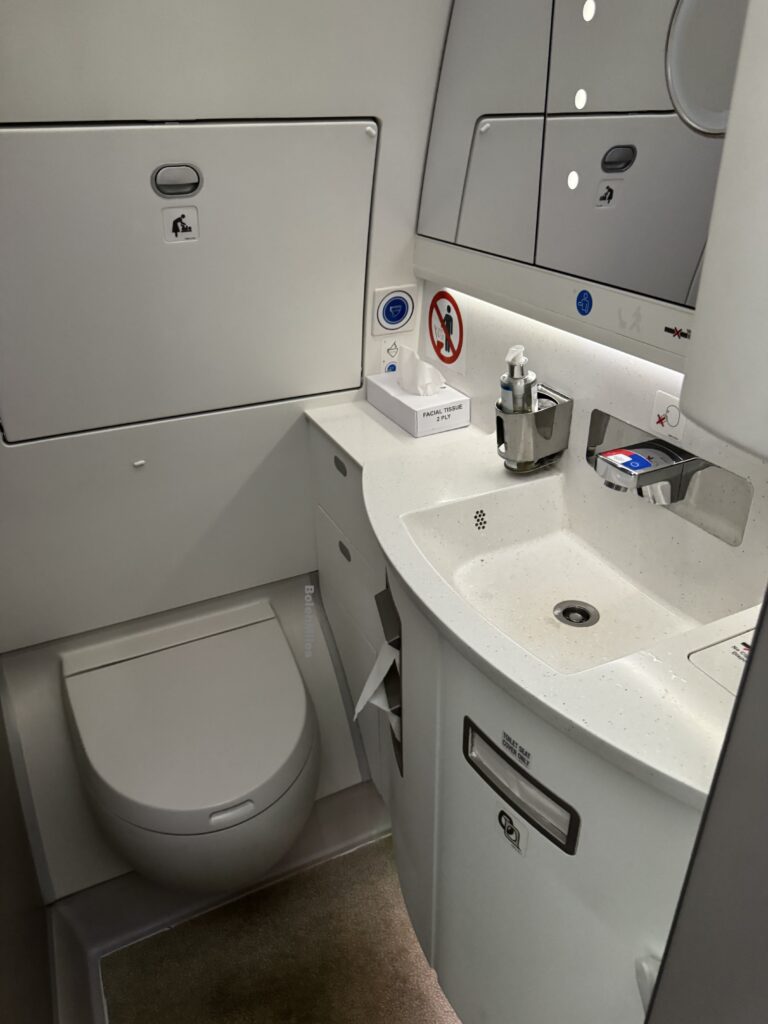
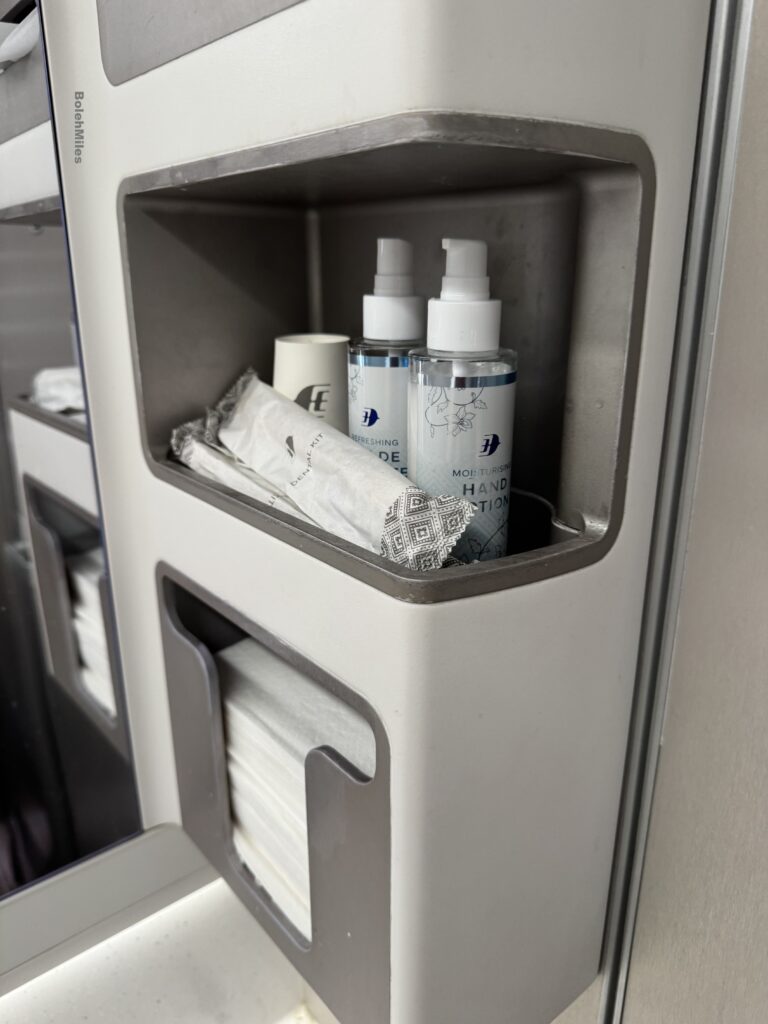
There were two lavatories shared among the 35 Business Class seats, and I never had to wait long to use them.
Like most Malaysia Airlines toilets, they are fairly basic. But they were kept clean throughout the flight.
The Crew
It’s always a pleasure chatting with the crew.
The purser told me she had been with MH for 35 years! Her colleagues over the years had moved on to SQ and other airlines for the opportunity to fly to more destinations. As for her, she simply chose to stay. Talk about loyalty to the company!
The crew were friendly throughout, but one male flight attendant stood out for going above and beyond to look after my family.
I sometimes feel that male cabin crew don’t get the recognition they deserve, myself included as I usually chat more with the female crew, so here’s shout-out to them.
Conclusion
| MH A350-900 Business Class | ||
|---|---|---|
|
||
| 😊 Pros | 😐 Cons | |
|
|
|
Malaysia Airlines may not offer the most cutting-edge Business Class product in the sky. There are no fancy bells and whistles like Singapore Airlines or Qatar Airways.
But flying Malaysia Airlines is like eating comfort food. It’s the kind of experience where you can just chill out. No pretence, no theatrics, just warm Malaysian hospitality and a comfortable journey home.
And sometimes, that’s exactly what you need on a homecoming flight after a long time abroad.
That’s all for this review. If you’re new to BolehMiles, don’t forget to join our community by clicking the button below. Until next time.